4 Best Radio Holsters for Duty Belts (Police Picks 2026)
Compare four radio holsters and pouches for police duty belts and outer carriers, including Zero9, Bianchi, 5.11 and…

The police hiring process is usually much longer and more detailed than a normal job application. Depending on the department, you may go through a written exam, physical ability test, oral board, background investigation, polygraph, psychological evaluation, medical exam, drug screening, academy training, and field training before you are fully working on your own.
There is no single national sequence. A city police department, state police agency, sheriff’s office, and federal law-enforcement agency can all use different steps, different standards, and a different order.
That is the most important thing to understand before you start: use the hiring instructions for the agency you are actually applying to. This guide will show you the stages you are most likely to encounter and link to our detailed guides for each one.
There is no universal timeline. A straightforward process can still take several months, and a complicated background investigation can make it longer.
As one current example, Washington, D.C.’s Metropolitan Police Department says its entire selection process may take about four to six months. It also notes that the length can depend on factors such as how many places an applicant has lived, how many states they have lived in, work history, and how quickly they respond to requests from the background investigator.
Other agencies move faster or slower. Hiring freezes, academy start dates, staffing, appeals, medical follow-up, and the number of applicants can all affect the timeline.
Do not make major life decisions based on an estimated academy date until the agency has actually given you a firm offer and instructions.
A common sequence looks something like this:
Do not treat that list as a guaranteed order. California POST, for example, establishes statewide minimum selection standards for participating agencies, including reading and writing ability, an oral interview, background investigation, medical evaluation, and psychological evaluation. Local agencies can add requirements such as a physical ability test, drug screening, higher education standards, or a polygraph.
That ability to add local requirements is why two departments in the same state can run noticeably different hiring processes.
Start with the actual job announcement.
Common requirements can include age, education, legal authorization to work, a valid driver’s license, criminal-history standards, and the ability to meet medical and psychological requirements. But the details vary.
California POST, for example, requires covered peace-officer candidates to meet statewide standards involving age, education, criminal-history review, background investigation, and medical and psychological suitability. Individual departments may set standards above those minimums.
Do not reject yourself because you read another department’s requirements online. And do not assume you qualify because a different agency accepted the same history.
Our separate guide explains common issues that may disqualify a police applicant.
The first application may look simple, but it starts the paper trail the rest of the process will be compared against.
Use accurate dates where you can, follow the instructions, and do not guess when a form asks for something you can verify. If the agency asks for documents such as transcripts, military records, driver’s-license information, or employment history, start gathering them early.
Later, you may complete a much more detailed Personal History Statement or background questionnaire. Inconsistencies between the short application and the full history form can create unnecessary problems.
If you discover an honest mistake, correct it. A documented correction is much easier to explain than an answer that looks deliberately misleading.
For a deeper look at common exam formats, see our Police Written Exam guide, including current PELLETB and NTN FrontLine examples.
Many departments use a written examination to evaluate reading, writing, judgment, reasoning, or human-relations skills.
There is no single national police entrance exam. California POST-participating agencies can use the POST Entry-Level Law Enforcement Test Battery or another professionally developed and validated test of reading and writing ability.
Washington, D.C.’s MPD currently uses the National Testing Network FrontLine exam, which includes video-based human-relations and judgment questions, report writing, reading, and writing components.
Your preparation should match the test your agency actually uses. A study guide for one exam may have little value for another.
A police physical ability test can be a traditional fitness test, a job-simulation course, or a combination of both.
Some departments test running, push-ups, sit-ups, or sprinting. Others use stairs, obstacles, dummy drags, fence climbs, or other tasks designed to resemble police work.
The standards are not universal. Train for the exact events, order, repetition rules, and time limits published by your agency.
Our full guide to the police Physical Ability Test (PAT) explains how to prepare without assuming every department uses the same test.
Many agencies use a structured interview or oral board to evaluate communication, judgment, motivation, interpersonal skills, and problem-solving.
California POST requires covered applicants to be interviewed before employment and identifies factors such as experience, problem-solving ability, communication skills, interest and motivation, interpersonal skills, and community involvement or awareness.
Other agencies use their own panels and scoring systems. The interview may include behavioral questions, scenarios, or questions about why you want to join that particular department.
You can prepare without memorizing canned answers. Our police oral board interview guide covers the process, common question types, and mistakes to avoid. Use the free interview practice worksheet to build examples from your own experience and review a practice round.
This is one of the stages that varies the most.
Some agencies place successful candidates on an eligibility list. Others issue a conditional offer before medical or psychological testing. A department may also conduct a chief’s interview, command interview, or additional review before moving you into the background phase.
A conditional offer is not the same as a final appointment. It normally means you still have required stages to pass.
The background investigation is often the longest and most intrusive part of police hiring.
Expect much more than a criminal-record check. Investigators may review employment, driving, finances, education, references, past residences, social media, military records, drug history, relationships, prior police contacts, and other parts of your life that are relevant to suitability.
California POST describes the background investigation as a thorough investigation of an applicant’s history to verify good moral character and ensure that past behavior is not inconsistent with peace-officer duties.
The investigator may contact people you listed—and people those references identify. They may compare what you say with records and with what employers, neighbors, relatives, and coworkers report.
A past mistake is not automatically fatal in every department. Dishonesty during the hiring process can create an additional problem of its own.
See our detailed guide to what police background investigators look for.
Not every department uses a polygraph.
California POST specifically lists a detection-of-deception examination such as a polygraph as an additional assessment that a local agency may choose to require rather than a statewide POST minimum.
Other departments make it a normal part of the process. Washington, D.C.’s MPD currently lists a polygraph after the background investigation in its selection sequence.
If your agency requires one, review your own background paperwork and correct genuine errors before the exam. Do not waste your time on internet advice about trying to manipulate the test.
Our police polygraph guide explains what applicants should expect.
Many departments use a pre-employment psychological evaluation to assess whether a candidate is suited to the psychological demands of police work.
California POST requires covered candidates to undergo a psychological evaluation conducted by a qualified psychologist or psychiatrist. Its system includes written assessments and a clinical interview and requires the candidate to be evaluated against job-related psychological dimensions.
The process is not about finding a candidate with a flawless personality or no life history. It is a professional evaluation of job-related suitability.
Our police psychological exam guide explains written testing, the interview, ADA considerations, and how to prepare.
Police work can involve running, driving, physical confrontation, firearms, shift work, stress, and emergency decision-making. Agencies therefore commonly use medical screening before appointment.
California POST requires a medical evaluation by a licensed physician for covered peace-officer candidates. Individualized assessment is important; medical suitability should not be reduced to a generic list copied from another department.
Drug screening is also common, although policies and look-back periods for past drug use vary substantially.
If you have a medical condition, do not assume that diagnosis alone ends your application. The agency’s lawful job-related standards and applicable disability law matter.
Passing each individual stage does not necessarily mean you are automatically hired.
The agency may conduct a final file review, command review, hiring-panel decision, or final interview. It may also be hiring a limited number of candidates from a larger pool of people who met the minimum standards.
Keep responding quickly to requests until you receive a final appointment or academy instructions. Candidates sometimes assume the process is over because the most difficult testing stages are behind them.
Once hired or conditionally appointed—depending on the agency—you may enter a basic police academy.
Academies combine classroom instruction with practical training. Subjects can include law, report writing, firearms, emergency vehicle operation, defensive tactics, first aid, communication, scenario training, physical fitness, and agency-specific procedures.
The duration and structure vary dramatically. For example, the New York State Police currently describes its recruit academy as an intensive 28-week residential program. Other academies use different schedules and lengths.
Our guide on how hard police academy is explains what recruits should expect.
Graduating from the academy usually does not mean you immediately work alone with no supervision. Our police field training guide explains how FTO phases, evaluations, remedial training and probation typically work.
New officers commonly enter a field-training or probationary period where experienced officers supervise and evaluate their performance in real calls, traffic stops, reports, radio use, decision-making, geography, policy, and day-to-day patrol work.
The academy teaches the foundation. Field training is where you have to apply it in an uncontrolled environment with real people and real consequences.
Probation can continue after field training ends. The exact length and evaluation system are department-specific.
That depends on the applicant.
The process is intentionally multi-layered because no single test can tell a department whether someone should receive police authority.
You cannot control the agency’s workload, but you can avoid causing your own delays.
MPD specifically notes that applicant responsiveness and the complexity of an applicant’s work and residence history can affect how long its process takes.
Usually, yes, unless a particular agency has a rule that says otherwise.
Because police hiring can take months and there is no guarantee of appointment, many applicants apply to more than one department. Be honest when forms ask about other active applications, previous applications, or agencies that rejected or removed you from a process.
Different agencies may reach different decisions because their standards, hiring needs, and selection systems are not identical.
The answer depends on the agency and the stage.
You may be allowed to retest after a waiting period, reapply during a future recruitment, appeal a medical or psychological decision, or be permanently barred for a particular disqualifying event. Do not assume that failing one department’s process means you can never become a police officer anywhere.
Likewise, do not assume you can simply hide a previous failure from the next agency. Police background forms often ask about prior law-enforcement applications and their outcomes.
Several months is common, but there is no national average you can safely apply to every agency. MPD currently estimates up to four to six months for its own selection process. Other agencies may move faster or considerably slower.
No. Some do and some do not. California POST treats polygraph testing as an optional additional departmental assessment rather than a statewide minimum.
Many use a structured interview or panel interview, but the format and name vary. California POST requires an oral interview for covered candidates, while other jurisdictions use their own selection systems.
Both models exist. Some departments hire recruits and pay them while they attend the academy. Others sponsor or select candidates through a different process. Read the job announcement carefully.
Often not. Medical, psychological, polygraph, command review, or final hiring decisions may occur after or alongside background. The order varies by department.
Choose the agencies you are seriously considering and read their current job announcements and recruiting pages. Then compare their minimum qualifications, testing process, academy arrangement, pay, location, and disqualifiers before investing months in an application.
The police hiring process is not one test. It is a chain of separate assessments designed to answer different questions: Can you read and write at the required level? Are you physically prepared? Can you communicate and make decisions? Is your history consistent with police work? Are you medically and psychologically suited to the job? Can you complete the academy and then perform under supervision in the field?
Take one stage at a time, keep your paperwork accurate, and use the standards from the department you are actually applying to.
If you are starting from the beginning, our How to Become a Police Officer guide is the best companion article to this hiring-process overview.
This article provides general information about U.S. police hiring. Requirements, order, timelines, and selection standards vary by agency and jurisdiction.
Compare four radio holsters and pouches for police duty belts and outer carriers, including Zero9, Bianchi, 5.11 and…
Compare four of the best law enforcement duty belts for police officers, including Bianchi, 5.11 and Condor options.…
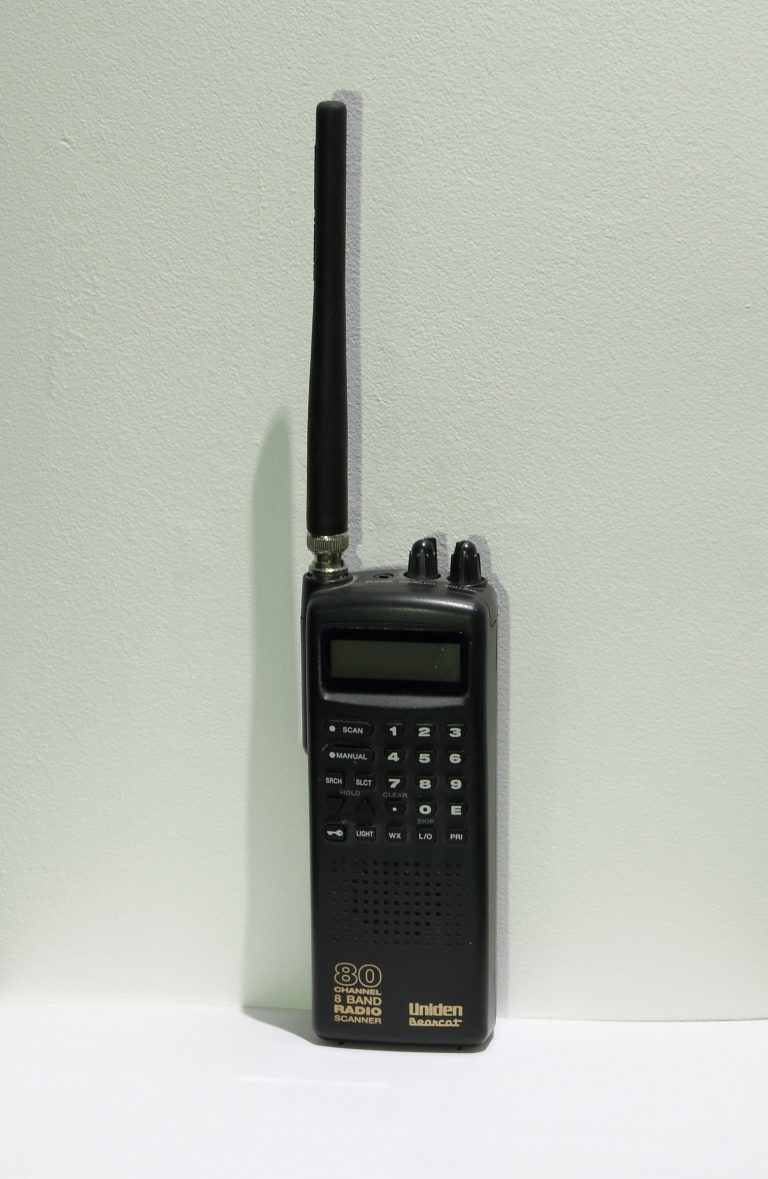
The best police scanners depend on your local radio system. Compare six current digital and P25 scanners, including…