
4 Best Radio Holsters for Duty Belts (Police Picks 2026)
Compare four radio holsters and pouches for police duty belts and outer carriers, including Zero9, Bianchi, 5.11 and…

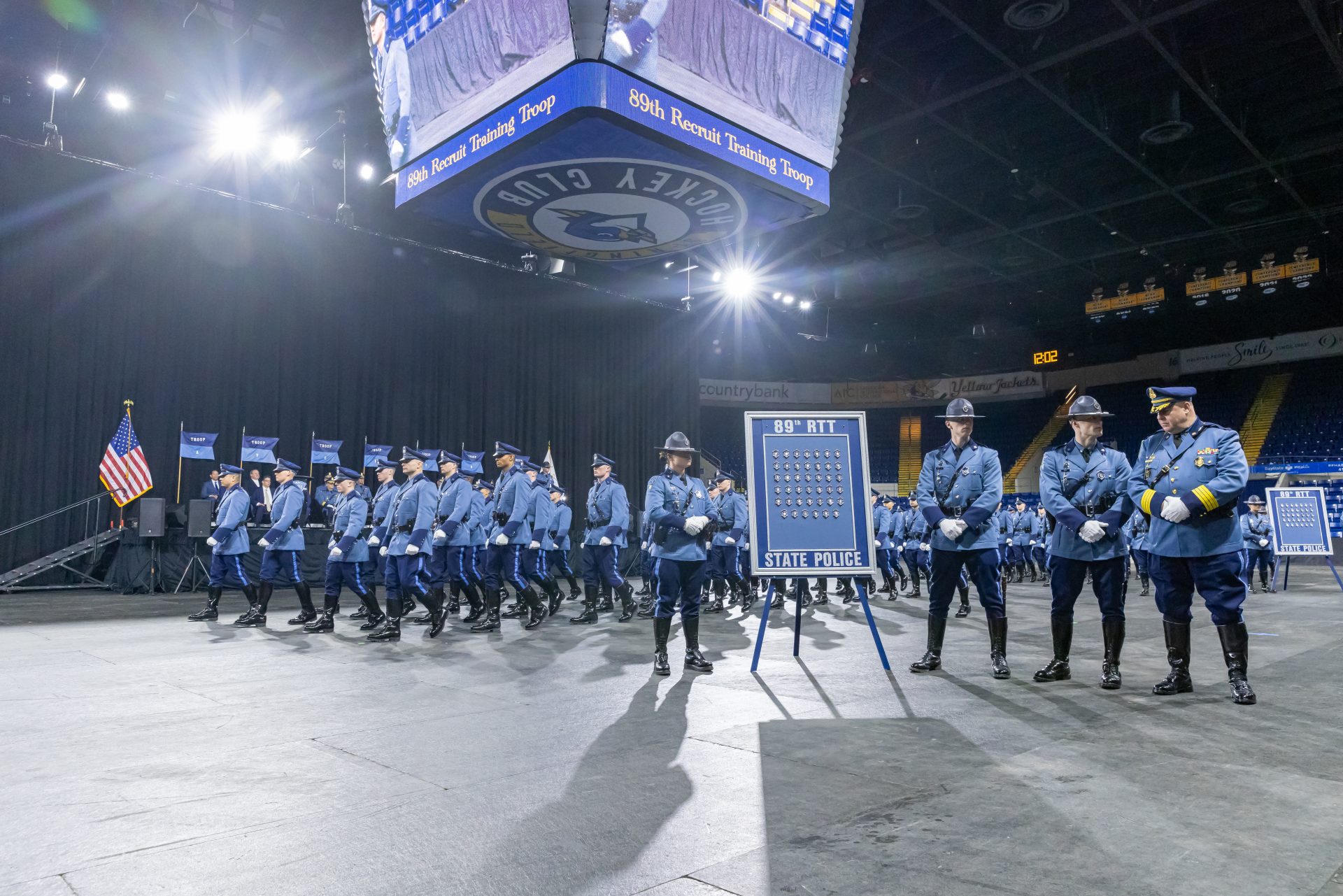
A police psychological exam is a pre-employment evaluation used by many law-enforcement agencies to assess whether a candidate is psychologically suited to the demands and responsibilities of police work. It is not a national standardized test, and the exact procedure varies by state and department.
A typical evaluation can include a personal-history questionnaire, standardized written psychological tests, review of relevant background information, and an interview with a psychologist or psychiatrist.
The goal is not to find a candidate with a “perfect” personality. Police work requires judgment, emotional control, integrity, resilience, interpersonal skills, and the ability to function under stress. The evaluation looks at job-related patterns and risk—not whether you match a movie stereotype of what a cop should be.
No single federal rule requires every U.S. police department to use the same psychological screening process.
Many agencies do require one. California, for example, requires peace-officer candidates covered by POST standards to complete a psychological evaluation before appointment. The Metropolitan Police Department in Washington, D.C. also includes a psychological evaluation in its police hiring process.
Other departments may use different procedures, evaluators, or timing. Always check the current hiring information for the agency you are applying to.
It often occurs late in the selection process, after an applicant has already passed earlier screening steps.
That timing matters because psychological testing that is designed to reveal mental impairment can qualify as a medical examination under the Americans with Disabilities Act. The EEOC explains that employers generally cannot require medical examinations or ask disability-related questions before making a conditional job offer.
After a conditional offer, an employer may conduct medical examinations and ask disability-related questions if the rules are applied consistently to people entering the same job category, subject to the ADA and other applicable law.
Exact sequencing can still differ between agencies, so follow the instructions in your own hiring process.
A useful official example is California POST. Its candidate-selection guidance describes several parts of the evaluation.
You may complete a psychological history questionnaire that is separate from the background-investigation paperwork.
The evaluator may also receive relevant information from the hiring agency. California POST explains that personal-history and background information are important because the psychologist is not evaluating test scores in isolation.
This is one reason consistency matters. If your background packet says one thing and you tell the psychologist something completely different, expect questions.
Standardized psychological instruments may be used to assess job-relevant traits, normal personality functioning, and possible areas of concern.
In California’s POST system, the required process includes at least two written assessments: one aimed at identifying patterns of abnormal behavior and another assessing normal behavior, followed by a clinical interview.
That does not mean every department in the country uses the same tests or scoring system.
You will usually meet with a licensed psychologist or psychiatrist. The interview may cover your personal history, work history, stress, relationships, judgment, past behavior, coping, and anything in the test results or background file that needs clarification.
This is not the time to perform a character you think the psychologist wants to see. A forced “nothing ever bothers me” persona can be less convincing than a realistic explanation of how you handle stress.
The evaluator provides the hiring agency with the type of suitability determination required by that process.
California POST, for example, requires a determination that the candidate is psychologically suitable for exercising the powers of a peace officer. The hiring authority still makes the ultimate employment decision.
Different agencies use different job analyses and standards, but common job-related areas can include:
California POST’s psychological-screening framework, for example, requires evaluation against job-related psychological dimensions and includes assessment of bias that could adversely affect the exercise of police powers.
The important word is job-related. The process is not supposed to be a general referendum on whether the evaluator likes your personality.
There is no universal question list, and trying to memorize “perfect answers” misses the point.
You may be asked about areas such as:
The psychologist may spend more time on one area because something in your history or testing needs clarification. That does not automatically mean you are failing.
No blanket rule makes every mental-health diagnosis an automatic police disqualifier.
The ADA generally requires employment decisions involving disability to focus on whether the person can perform the essential functions of the job, with reasonable accommodation where required, and whether any safety concern meets the legal standard for a direct threat.
Individual states and agencies may have job-related psychological standards, and the evaluator can consider relevant history. But a diagnosis by itself is not the same thing as an individualized assessment of current job suitability.
If you have a specific condition and are worried about how it affects eligibility, get the department’s written standards and, if necessary, qualified legal or medical advice rather than relying on anonymous internet claims.
Having seen a therapist does not automatically mean you are unsuitable for police work.
People seek counseling for many reasons: grief, relationships, stress, trauma, family problems, or personal development. What matters in a lawful employment evaluation is the job-relevant information and the standards that apply to the position.
Do not hide treatment that you are legally required to disclose in a post-offer process. At the same time, do not assume the hiring agency is entitled to ask any medical question at any stage. ADA timing and confidentiality rules matter.
Read the personal-history and background-investigation forms you completed. You do not need to memorize them, but you should understand what you disclosed.
If you discover an inaccurate date or forgotten event, correct it instead of trying to defend an answer you now know is wrong.
Some written tests are long. Arriving badly sleep-deprived makes concentration harder and does not help you present an accurate picture of yourself.
Do not stop prescribed medication in an attempt to “perform better” on a psychological test. Take medication as directed unless your own medical professional tells you otherwise, and follow any instructions the evaluator gives you about what information to provide.
Psychological tests often contain overlapping or repeated items. Trying to reverse-engineer the “cop answer” to every question can create inconsistent response patterns.
You are applying for a job where credibility matters. Treat the evaluation accordingly.
Yes. An agency can determine that a candidate does not meet the psychological suitability standard required for appointment.
But the process after an unfavorable evaluation varies. Some jurisdictions provide review, appeal, or second-opinion procedures. California, for example, has rules addressing independent evaluations and how departments may resolve discrepant psychological determinations.
If you receive an adverse result, ask the hiring agency for the written process that applies to you. Do not assume another state’s appeal rules apply.
These processes overlap, but they are not the same.
Information can move between these stages. A psychologist may review background information, and a background investigator may flag issues that need clarification elsewhere.
There is no universal duration. Written testing plus an interview can take several hours depending on the agency, instruments used, and whether follow-up is needed. Use the appointment instructions from your department.
Personality assessment can be part of it, but the overall evaluation is broader. It may combine multiple written tests, personal-history information, background material, and a clinical interview.
Not in the way you study for a written knowledge exam. You can prepare by understanding the process, reviewing your own history, sleeping normally, and arriving ready to answer honestly.
That depends on the agency, but sharing relevant background information with the evaluator is common. California POST specifically requires background and personal-history information to be incorporated into the psychological screening process.
A professional evaluation should not normally be reduced to one isolated response. Evaluators integrate multiple sources of information, test patterns, history, and interview findings according to the standards they are required to use.
The police psychological exam is not something to “beat.” It is a job-suitability evaluation used by many agencies to decide whether a candidate is psychologically prepared for the authority, stress, judgment, and interpersonal demands of police work.
Know your own history, follow the instructions, correct honest mistakes, and do not try to manufacture a flawless personality. Our police hiring process guide shows where the psychological evaluation fits, while our guide to what can disqualify a police applicant explains the broader selection issues.
This article provides general information about U.S. police hiring and is not medical or legal advice. Requirements vary by agency and jurisdiction.
Compare four radio holsters and pouches for police duty belts and outer carriers, including Zero9, Bianchi, 5.11 and…

Compare four of the best law enforcement duty belts for police officers, including Bianchi, 5.11 and Condor options.…
The best police scanners depend on your local radio system. Compare six current digital and P25 scanners, including…