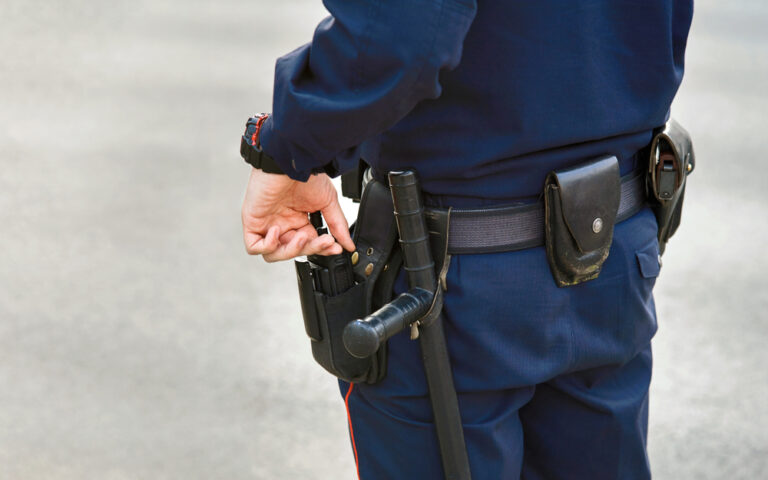
4 Best Radio Holsters for Duty Belts (Police Picks 2026)
Compare four radio holsters and pouches for police duty belts and outer carriers, including Zero9, Bianchi, 5.11 and…

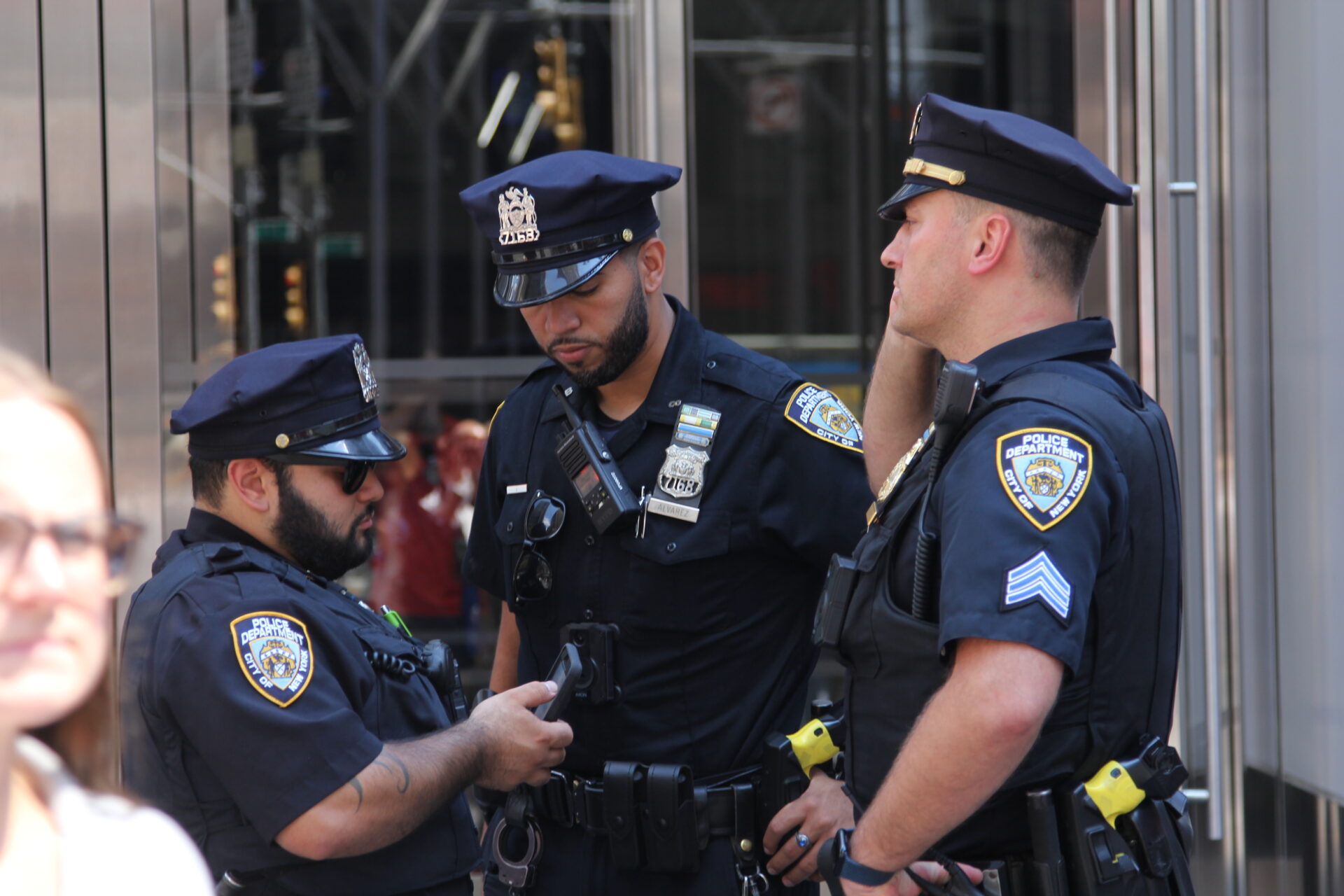
Learning how to become a police officer is a fantastic opportunity for motivated and driven individuals.
With a passion for serving and protecting the public, this career has the opportunity to better yourself and your community.
There are several steps associated with stepping into the world of police training, as we’ll review in this guide.
Before you start researching the steps to learn how to become a police officer, it’s important to know the job.
Growing up, we’ve all seen officers in action, whether in real life or on TV, and in movies.
It’s crucial to note that an officer’s career is far more strenuous with real-world scenarios, both physically and mentally.
Some of the most common duties you’ll discharge as a police officer include:
As with most careers, the more experience you get as a police officer can translate to better future opportunities.
The more proficient you are at your job, the easier it will be to receive promotions and rise through the ranks.
Officers can pursue further career options, including becoming a Sergeant, Captain, or other specialties.
Officers often also pursue careers as lieutenants or detectives if they want a more complex placement. Our police officer vs. detective comparison explains how the day-to-day work changes.
With that said, this job training will include further education and testing to ensure you’re adequately prepared.
Seniors roles are often required to perform the following tasks:
Instead of driving past your local police department wishing to be an officer, it’s time that you started the process yourself.
Knowing the seven essential steps you’ll have to go through to become a law enforcement officer is critical.
Although job training requires a lot of physical strength and effort, it’s well worth the time to embark on a new life journey.
As you would expect, every law enforcement officer is required to pass a police background check before receiving training.
When pursuing a career in law enforcement, you could even be required to go through a credit check.
Every aspect of your past will be looked at with a fine-toothed comb to ensure you’re a suitable community representative.
You must think about your history to determine if there could be any red flags in your background.
If so, speaking with an admissions representative can give you a good idea of whether applying is worthwhile.
With a clean background history, they’re going to be looking for gross misdemeanors and felonies.
If you have either of these on your record, you’ll likely be automatically disqualified from being a police officer.
However, minor offenses can be an issue depending on the policies of your local department.
Misdemeanors might not be automatic rejection, but they can still put a noticeable mark on your record.
Another check that’s often common when becoming a cop is a credit check.
You might be wondering, “Why does a police department need to know how I manage my funds?”
This information allows your employers to get a good idea of your financial responsibility or any concerns, such as gambling.
As mentioned, every detail of your life will be considered during the application process.
Don’t be surprised if you’re also required to provide information about past employment, academics, and your residency.
There’s a common misconception that there are few requirements to become a police officer.
However, education requirements are one of the most important things that these professionals need to meet.
As an officer, you have a significant duty that often involves making on-the-spot decisions and life or death decisions.
To ensure that every department representative has an adequate education is of the utmost importance.
Typically, police departments will require you to either have a specific degree paired with academy training.
However, these requirements will vary from state to state.
You might find your local department requires an associate’s degree as a minimum educational requirement while others don’t need any degrees.
There is no single national education route for becoming a police officer. The requirement can range from a high school diploma to college credits or a degree, depending on the department. Our police hiring process guide shows how the major selection stages fit together. For education specifically, you need to check two separate things:
As mentioned, the educational requirements for becoming a cop will vary from state to state.
You must review the licensure requirements for your specific jurisdiction.
It’s also crucial that you prepare yourself for academy training, as it’s a multi-faceted experience. I’ve put together a separate guide on how hard police academy is and what recruits should expect.
Regardless of the training program you join, it’s likely to include in-depth classroom instruction.
You’ll not only need to be well-versed in local laws but state laws as well.
Most police officers need to have a phenomenal grasp of police ethics, constitutional law, and civil rights.
As you go through your training academy, you’ll undoubtedly have hands-on training as well, which we discuss in further detail below.
Most recruits will be expected to train in firearm use, traffic control, patrolling, self-defense, emergency response, and first aid.
The best way to look at training is that it’s your primary source of knowledge for the foundations of being a police officer.
Military service can help in some hiring processes, and some departments allow qualifying military service to substitute for part of a college requirement. But that is agency-specific; military experience does not automatically replace education, academy training, or other hiring requirements nationwide.
As you have already received ample training in most foundational areas of policing, military personnel generally don’t require degrees.
In most situations, those in uniformed services are given priority over the average cadet because of their ample experience and skills.
When applying for a police position as a former military member, you’ll have to prove your years of service.
Also, it will be required that you show evidence of a finalized retirement as well as your discharge papers.
Another essential facet is that military personnel will still have to prove their emotional, mental, and physical fitness.
Training is required once you’ve made it through the pre-screening process and are completing your classroom education.
There are traditionally two steps to training law enforcement officers, which include field and in-service experience.
These opportunities allow you to expand on your classroom education and put your law enforcement knowledge to work.
Police academies also include practical skills and scenario training. Recruits have to show that they can apply classroom instruction to controlled police situations, not simply pass written exams.
You’ll be expected to show proficiency in defensive maneuvers, firearms handling, first-aid administration, and more.
A few other areas of expertise you’ll explore are:
During this phase, you’ll be faced with simulated real-world experiences to help you acclimate to your new role.
For example, you’ll likely work through domestic violence, terrorism, hate crime, and delinquency simulations.
Every officer will be expected to follow through with the simulations as they would in a real-world situation.
After academy graduation, many departments place new officers into a structured field training program before they are released to more independent patrol. Field training is different from academy scenario work because the calls, people and consequences are real.
After graduating, the next level is being gainfully employed and beginning your job as a newly appointed officer.
During this phase, you’ll likely be on probation for up to 12 months before becoming a standalone officer.
As a recent graduate, you’ll work with more seasoned officers for added orientation.
The in-service training is often referred to as on-the-job training, exposing you to real-world situations.
At this point, you’ll be entirely out of the classroom and have to apply your recently learned knowledge.
Typically, the officer that you are placed with will be required to grade your performance over time.
These reports are then used to assess whether you would be a positive contribution to the force.
The testing and certification stage varies a lot by jurisdiction. You may face a civil-service or entry-level written exam before hiring, academy examinations during training, and a state certification test before or after appointment.
Many departments also use a formal police oral board interview, and some require a pre-employment polygraph as part of the selection process. Neither step is universal, so check the agency’s current hiring instructions.
During this process, you’ll be responsible for putting your classroom and field training to good use.
POST—Peace Officer Standards and Training—is a common name for state standards-and-training bodies, but there is no single nationwide “POST exam.” Always check the requirements for the state and department where you intend to apply.
It’s important to note that as every state has a different licensing board, the tests will vary significantly.
However, in most instances, an experienced officer will be exposed to topics such as:
Passing this examination is likely one of the most essential parts of learning how to become a cop.
Without a passing grade, you won’t be able to move onto the next step of the process.
When you pass, you’ll receive a police officer license, granting you the ability to work within your jurisdiction.
Many agencies require a police psychological evaluation before appointment. The exact timing, tests and suitability standards vary by jurisdiction and department.
This process helps to ensure that every individual has the mental clarity to perform their duties as an officer.
You will also have to show your mental strength as this job is anything but easy outside of proving your physical strength.
To be granted a police officer position, you will go through various psychological tests with a licensed psychologist.
Some of the most common psychological exams include:
It’s important to note that these evaluations have the sole responsibility of determining your mental fitness.
It’s essential that you are 100% honest with the examiner, as getting caught in a lie could be disastrous.
Remember that psychologists are well-prepared to look for indicators that officers are susceptible to mental health issues.
The final step of learning how to become a cop is to get sworn in, which is a celebratory occasion.
By this point, you’ve proven that you meet all police officer requirements while also having real-world experience.
The swearing-in ceremony is something that every officer remembers, as it’s a significant achievement.
In fact, you won’t be considered one of the qualified candidates until you go through this process.
Once you’re sworn in, you’ll then receive your first assignment as well as your badge and gun.
Typically, the ceremony will be in front of colleagues, authorized witnesses, and department administrators.
It’s also likely you’ll have to take an oath depending on the requirements for your jurisdiction.
All in all, the foundations of being a reputable officer require you to uphold the constitution while faithfully discharging police officer duties.
More education could be required if you’ve successfully completed your background check, classroom instruction, and physical training.
As a police officer, you must always stay up-to-date with new rules and tactical training techniques.
You can learn more about special weapons, tactical training, service training, and more through a continuing education training academy.
This additional training can give you far more experience beyond your 4-year degree, helping diversify your skills.
Although in many jurisdictions, additional training could be seen as optional, others make it mandatory.
Through your years of being an officer, you will be required to receive annual training to reinforce your skills.
Undoubtedly, learning how to become a police officer requires several unique skills from your training academy.
Not only will you need hands-on experience and training, but classroom instruction as well.
With the correct amount of training, you’ll be well-prepared to handle an assortment of incidents in your jurisdiction.
Compare four radio holsters and pouches for police duty belts and outer carriers, including Zero9, Bianchi, 5.11 and…
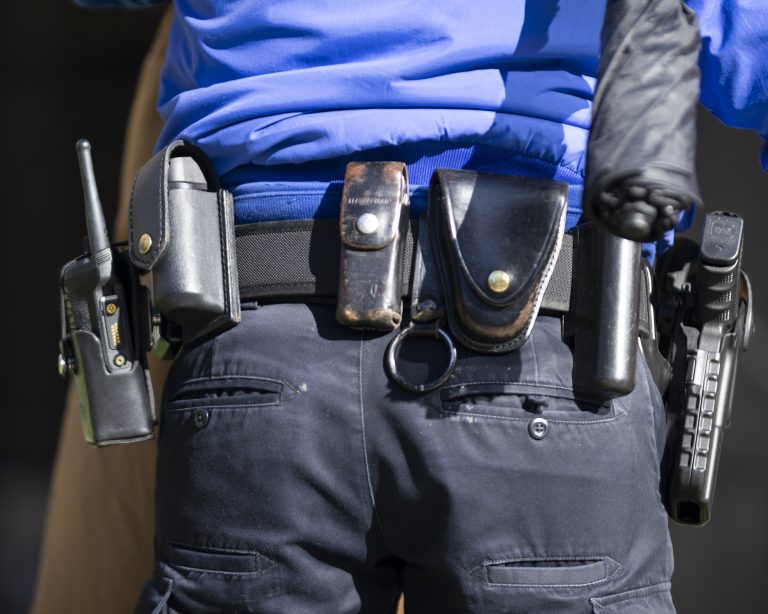
Compare four of the best law enforcement duty belts for police officers, including Bianchi, 5.11 and Condor options.…
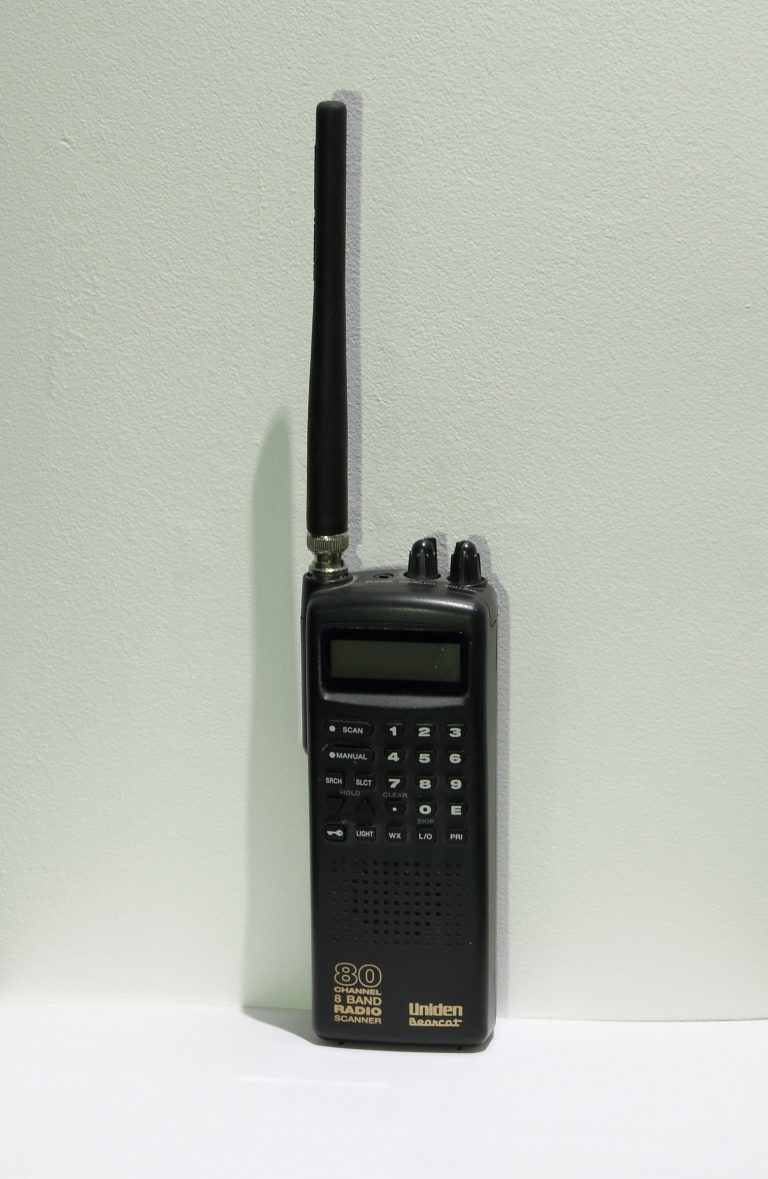
The best police scanners depend on your local radio system. Compare six current digital and P25 scanners, including…