
4 Best Radio Holsters for Duty Belts (Police Picks 2026)
Compare four radio holsters and pouches for police duty belts and outer carriers, including Zero9, Bianchi, 5.11 and…

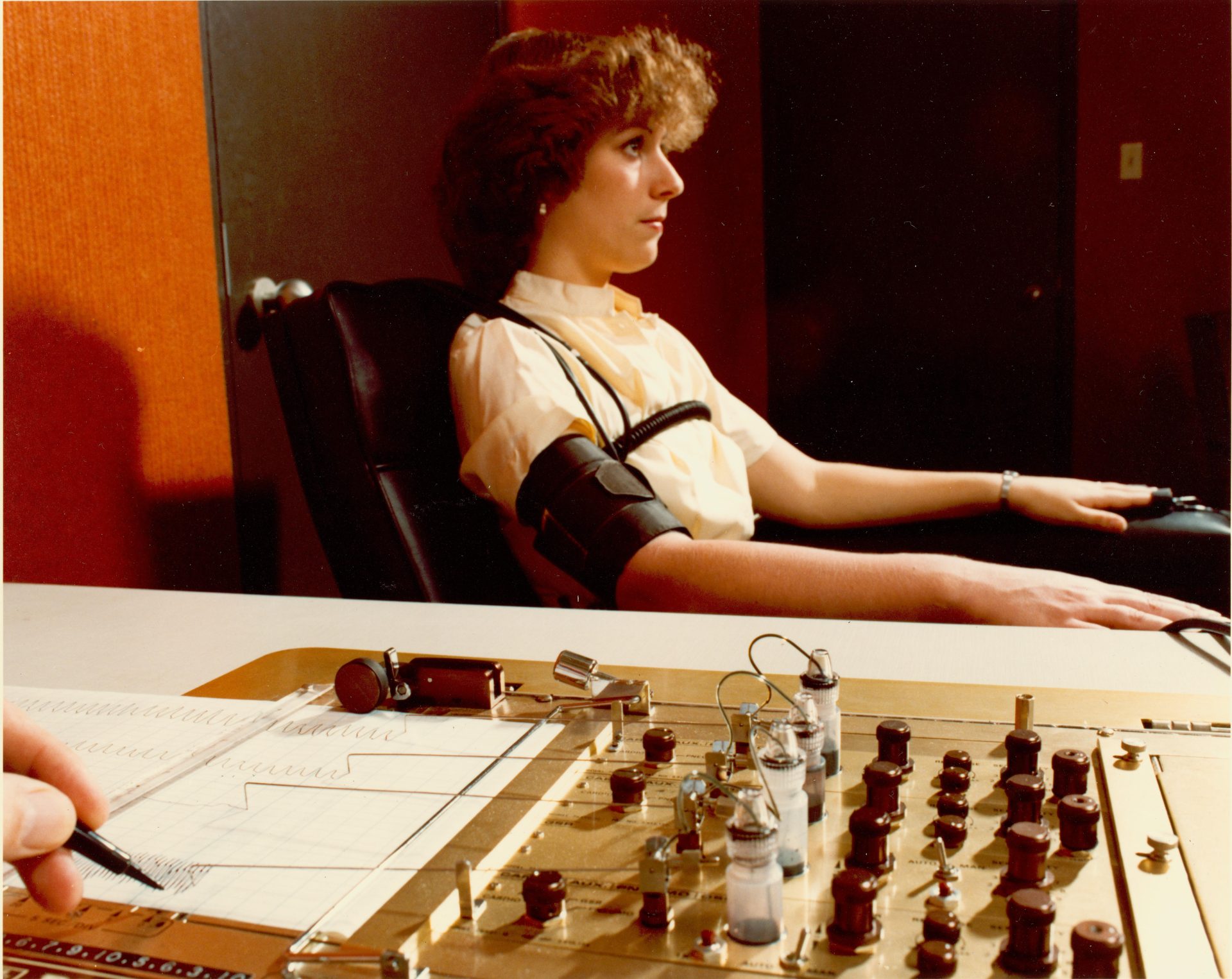
A police polygraph test is not a universal part of police hiring in the United States. Some departments require one, others use a different detection-of-deception exam, and some do not use one at all. The first thing to check is the current hiring process for the agency you are actually applying to.
Where a polygraph is used, it normally sits inside the larger background-investigation process. The examiner is usually trying to compare your answers with what you already disclosed about criminal behavior, drug use, employment, driving, finances, and other parts of your personal history.
The biggest mistake is treating the polygraph as a game you have to “beat.” For a police applicant, the safer approach is much simpler: know what you disclosed, correct honest mistakes before the exam, and do not create a second problem by changing your story.
No. There is no national rule requiring every police applicant to take a polygraph.
California POST, for example, lists a detection-of-deception examination such as a polygraph as an additional assessment an individual department may choose to require. By contrast, the Pennsylvania State Police currently requires cadet applicants to complete a pre-employment polygraph before the background investigation.
The Metropolitan Police Department in Washington, D.C. also lists a polygraph as part of its selection process for several sworn positions. New York State Police applicant materials similarly state that information supplied during the process may be verified through a polygraph examination and background investigation.
That variation is why you should never prepare from a generic “police hiring checklist” and assume it applies everywhere.
For public-sector police hiring, federal law does not create the same blanket restriction that applies to most private employers.
The U.S. Department of Labor explains that the Employee Polygraph Protection Act generally restricts private employers from using lie-detector tests, but federal, state, and local governments are excluded from the Act.
That does not mean every public agency can do whatever it wants. State law, civil-service rules, collective bargaining agreements, agency policy, and other employment laws can still affect the process.
The exact procedure varies, but a pre-employment polygraph usually has several stages.
The examiner normally reviews the process with you before the instrument is attached. You may discuss your background paperwork, clarify questions, and make sure you understand the topics that will be covered.
This part matters more than many applicants expect. If you suddenly remember that a date, amount, frequency, or other detail in your application was wrong, say so. An honest correction is easier to explain than an inconsistency that appears to be deliberate.
A traditional polygraph records several physiological signals. The Department of Labor definition refers to cardiovascular, respiratory, and electrodermal activity.
The machine does not literally read thoughts. It records physiological responses while the examiner asks questions and then interprets those responses using the testing method being used.
The questions are normally reviewed before the test. In a police hiring setting, topics may overlap with the same areas covered in your police background investigation.
Depending on the agency, that can include criminal conduct, drug history, dishonesty, employment issues, theft, driving, or information you provided on the personal-history questionnaire.
After the testing phase, the examiner may ask follow-up questions about responses that need clarification. The examiner then reports the result according to that agency’s procedure.
Do not assume the examiner alone makes the final hiring decision. The polygraph is one part of a much larger selection process.
There is no universal list of questions.
A police agency is usually interested in whether the information in your application and background packet is complete and accurate. Pennsylvania State Police, for example, describes the polygraph as an examination used to assess truthfulness or deception across aspects of an applicant’s life.
Common subject areas can include:
The point is not to memorize answers. You should already know what you wrote in your own application.
Do the boring things well.
I would not waste time searching for “polygraph countermeasures.” For a police applicant, deliberately trying to manipulate the test can create a serious integrity problem of its own.
Polygraph testing is not a perfect measurement of truth and deception. Even the FBI has historically cautioned that the technique has limitations and should not be treated as an infallible truth machine.
More importantly for an applicant, agencies do not all use the same rules for what happens after an inconclusive or problematic result. One department may allow clarification, additional investigation, or another examination; another may have a different policy.
If you receive an adverse result, ask the recruiting unit what the department’s process is. Do not assume that internet advice about another agency applies to yours.
It depends on the issue, but honesty is a recurring theme throughout police hiring.
Some conduct is an automatic disqualifier under law or agency policy. Other conduct is evaluated by seriousness, recency, pattern, and rehabilitation. But an applicant who hides information can turn a potentially explainable issue into a separate integrity concern.
Our guide to police-officer disqualifiers explains that distinction in more detail.
These are completely different parts of the hiring process.
A polygraph is a detection-of-deception procedure used by some agencies to help verify information. A police psychological evaluation is intended to assess psychological suitability for the job and may include standardized tests, personal-history information, and a clinical interview.
Do not confuse either one with the ordinary background investigation. The three processes may share information, but they have different purposes.
There is no universal length. The pre-test discussion, actual testing, breaks, and follow-up questions can make the appointment much longer than the short period when sensors are attached. Follow the time estimate given by your department.
You can decline to participate, but if the polygraph is a required step in that agency’s lawful hiring process, refusing it may end your application. Check the written hiring rules for the department involved.
No national rule says that. Agencies set their own policies, and a result from one process does not automatically tell you how every other department will handle a future application.
If your application was incomplete or inaccurate, correct it. Trying to preserve an incorrect answer because you are afraid of how the correction will look usually creates a worse problem.
A police polygraph is best understood as one possible verification step in a much larger hiring process. Some agencies require it; others do not. If yours does, review your own paperwork, follow instructions, ask questions when something is unclear, and be consistent and honest.
If you are still trying to understand the full sequence, start with our police hiring process guide, which shows where the polygraph fits alongside the background investigation, oral board, psychological evaluation, medical exam and academy.
This article provides general information about U.S. police hiring. Requirements vary by agency and jurisdiction.
Compare four radio holsters and pouches for police duty belts and outer carriers, including Zero9, Bianchi, 5.11 and…
Compare four of the best law enforcement duty belts for police officers, including Bianchi, 5.11 and Condor options.…
The best police scanners depend on your local radio system. Compare six current digital and P25 scanners, including…