4 Best Radio Holsters for Duty Belts (Police Picks 2026)
Compare four radio holsters and pouches for police duty belts and outer carriers, including Zero9, Bianchi, 5.11 and…

Police field training is the bridge between the academy and working independently on patrol. You may have passed written exams, firearms qualifications, scenarios and physical testing, but field training is where you have to apply those skills on real calls, with real people, while a Field Training Officer is watching and evaluating what you do.
The details vary by department. Some agencies use a traditional Field Training Program (FTP), while others use a problem-based Police Training Program (PTP) or their own state-approved model. The length, phases, evaluation forms and terminology are not universal.
But the basic goal is remarkably consistent: by the end, the department needs to know whether you can perform general patrol duties safely, legally, professionally and with less direct supervision.
Field training is structured on-the-job training for a newly assigned officer after academy training. Instead of working alone, the new officer is paired with an experienced training officer and gradually takes on more responsibility.
California POST describes its approved patrol-training programs as the transition from the academy to general uniformed patrol. The programs combine agency-specific instruction with standardized performance evaluation. The stated goal is to produce officers who can eventually handle solo patrol safely, skillfully, productively and professionally.
That is a useful way to think about field training anywhere in the U.S.: it is not simply “riding with a senior cop.” It is a documented training and evaluation period.
FTO usually means Field Training Officer.
The FTO is an experienced officer assigned to coach, demonstrate, observe and evaluate the trainee. Depending on the department, that officer may also write daily evaluations, recommend remedial training and document whether the trainee is meeting required standards.
FTO selection itself can be formal. California POST, for example, requires FTO candidates in its model to meet experience and certification requirements and complete a 40-hour Field Training Officer Course before serving in the role. That is a California example, not a national rule.
There is no national length.
California provides a good example of how much programs can differ even inside one state. Its traditional Field Training Program must run at least 10 weeks, while the Police Training Program must run at least 15 weeks. POST also notes that many agencies build longer programs around multiple training phases.
An agency may extend training when a recruit needs additional work in a particular area. Other agencies may have a completely different minimum based on state rules, collective bargaining agreements, local policy or the structure of their academy.
If you are applying somewhere now, use that department’s current recruit or FTO manual rather than assuming that a number you saw online applies to you.
The academy gives you controlled instruction. Field training removes most of that control.
You may begin with the FTO handling more of the call while explaining what is happening. As the program progresses, you are expected to take the lead more often until you can manage routine patrol work with the FTO intervening only when necessary.
Typical areas include:
California POST’s Field Training Program breaks the model into 18 competency sections, including officer safety, ethics, use of force, vehicle operations, radio systems, report writing, investigations, traffic, tactical communication and agency-specific activities.
Many traditional FTO programs divide training into phases. The exact number and length vary.
California POST says agencies do not have to use four phases, although four phases reflect a common best-practice structure. Its FAQ gives an example where a trainee spends several weeks with different FTOs and later returns to an earlier FTO for a final phase.
The reason for rotating trainers is important: a recruit should be able to perform consistently for more than one instructor. If you only succeed with one FTO who constantly prompts you, the department still does not know how you will function independently.
Expect more explanation and demonstration. You are learning the department’s local procedures, geography, radio practices, report systems and expectations.
You normally take on more of the work. The FTO should need to prompt you less often, and your mistakes should become more specific rather than fundamental.
The expectation shifts toward near-independent patrol performance. The FTO is still responsible for safety and can intervene, but you should increasingly be making the decisions, handling the radio, conducting the investigation and completing the paperwork yourself.
Field training is usually documented continuously rather than judged only by one final test.
A traditional model may use a Daily Observation Report, often shortened to DOR, where the FTO scores or describes the trainee’s performance in specific areas. California POST publishes standardized DOR formats for its model.
That means one bad call does not necessarily define the entire program. What matters is the pattern: Are you learning? Are the same errors repeating? Can you apply feedback the next time a similar situation occurs?
Evaluation categories commonly include things such as:
The exact form and scoring scale belong to your agency.
This is one of the biggest transitions from academy work to real patrol.
In training, you may get a clean scenario with enough time to think. On patrol, you can finish one call, get sent directly to another, make an arrest, answer the radio and still have several reports waiting.
The report must still make sense to a supervisor, prosecutor, investigator or someone reading it months later.
Good field training should teach you to identify what matters, take useful notes and write clearly without turning every report into a novel. Our guide on how to read a police report also shows why attribution, chronology and clear separation between observations and statements matter.
You will make mistakes. Field training assumes that.
The key distinction is between a correctable training issue and a pattern that shows the trainee is not reaching the required standard.
A competent FTO should identify the problem, explain the expected performance and give you a reasonable opportunity to improve. California POST specifically includes remedial training in its Field Training Program framework.
Remedial training might mean:
Needing remedial training does not automatically mean you are failing. Repeatedly making the same serious mistake after training and feedback is more concerning.
The answer depends heavily on the recruit.
You may have to listen to the radio, watch a person’s hands, remember what a witness just said, notice evidence, decide what law applies and plan what you are going to write—all at the same time.
Academy recruits get used to being students. Field training expects you to become an officer. At some point, constantly looking at the FTO for the answer becomes a problem.
New officers sometimes think speed equals competence. It does not. Some situations require immediate action; many others improve when you take a few seconds to gather information and think.
Being evaluated every shift can wear on you. The useful question is not whether every criticism feels fair in the moment. It is whether there is something in the feedback you can use on the next call.
A recruit who performs well on calls but cannot finish accurate reports can still struggle badly in field training. Paperwork is part of the job, not something that happens after the “real police work.”
Yes.
A trainee can be released from field training, extended, recycled into an earlier phase, given remedial training or, depending on the department and employment status, terminated or reassigned.
The exact process depends on agency rules and any applicable civil-service, labor or employment protections.
A fair training program should document performance and give the trainee a reasonable opportunity to meet the standard. California POST identifies standardized evaluation, feedback and documentation as core features of a defensible field-training program.
An extension does not automatically mean your career is over.
Sometimes a department wants more observation before releasing a trainee to solo patrol. An extension may focus on a specific weakness such as report writing, radio use, geography, decision-making or officer safety.
Take the reason seriously and make sure you understand exactly what standard you are expected to meet. “Do better” is not a useful training goal. “Complete routine reports accurately without repeated FTO correction” is much clearer.
No.
Field training is the structured training and evaluation period where you work with an FTO or similar trainer.
Probation is an employment status that can last longer than field training. You may finish FTO and work independently while still being a probationary officer.
The probationary period gives the department additional time to evaluate your overall performance, conduct, reliability and ability to function as an officer. Its length and employment rules vary by agency and jurisdiction.
That is why I would not use “FTO,” “field training” and “probation” as interchangeable terms.
You do not need to know everything. You do need a solid foundation and the willingness to learn quickly.
If you are still preparing for the academy itself, our guide to how hard police academy is covers that earlier stage.
A good FTO has to do more than be a competent patrol officer.
The trainer has to explain decisions, recognize when to intervene, allow the trainee enough room to think, give useful feedback and document performance fairly. The best patrol officer on a shift is not automatically the best teacher.
The trainee also needs consistency. If one FTO tells you to do something one way and the next says it is completely wrong, ask which department policy or training standard controls the issue rather than trying to guess which personality to satisfy.
If you successfully complete field training, you are generally released to more independent patrol duties.
That is a major milestone, but you are still new.
You may remain on probation, receive closer supervision than an experienced officer and continue mandatory training. The first months working without an FTO are often when new officers discover which habits they actually learned and which ones were being quietly supported by the trainer sitting next to them.
The goal is not to finish field training believing you know everything. It is to reach the point where you can work safely and competently while continuing to learn.
They are difficult in different ways. The academy is structured and controlled. Field training is less predictable because your decisions affect real people and real cases while you are being evaluated at the same time.
If you are already employed as a sworn recruit or officer, field training is normally part of your paid employment. Hiring models vary, so confirm the details with your agency.
Often no. Many programs deliberately rotate trainees through multiple FTOs or phases. Your department’s model controls.
An FTO documents and evaluates performance, but the final employment or training decision usually involves supervisors or program administrators rather than one trainer acting alone. Procedures vary by agency.
There is no national answer. Academy length, field-training requirements and local probation rules all affect the timeline. California POST’s two patrol-training models alone have different minimum lengths: 10 weeks for FTP and 15 weeks for PTP.
Field training is where academy knowledge has to become usable police work. You are expected to learn the department, handle increasingly complex calls, write reports, communicate on the radio, make defensible decisions and show that you can eventually work without constant prompting.
Expect to be corrected. Expect some shifts to feel much harder than others. The important trend is that you need less help over time and can explain why you made the decisions you made.
For the full path leading to this stage, see our Police Hiring Process hub.
This article provides general information about U.S. police field training. Program length, phases, evaluation systems and probation rules vary by department and jurisdiction.
Compare four radio holsters and pouches for police duty belts and outer carriers, including Zero9, Bianchi, 5.11 and…
Compare four of the best law enforcement duty belts for police officers, including Bianchi, 5.11 and Condor options.…
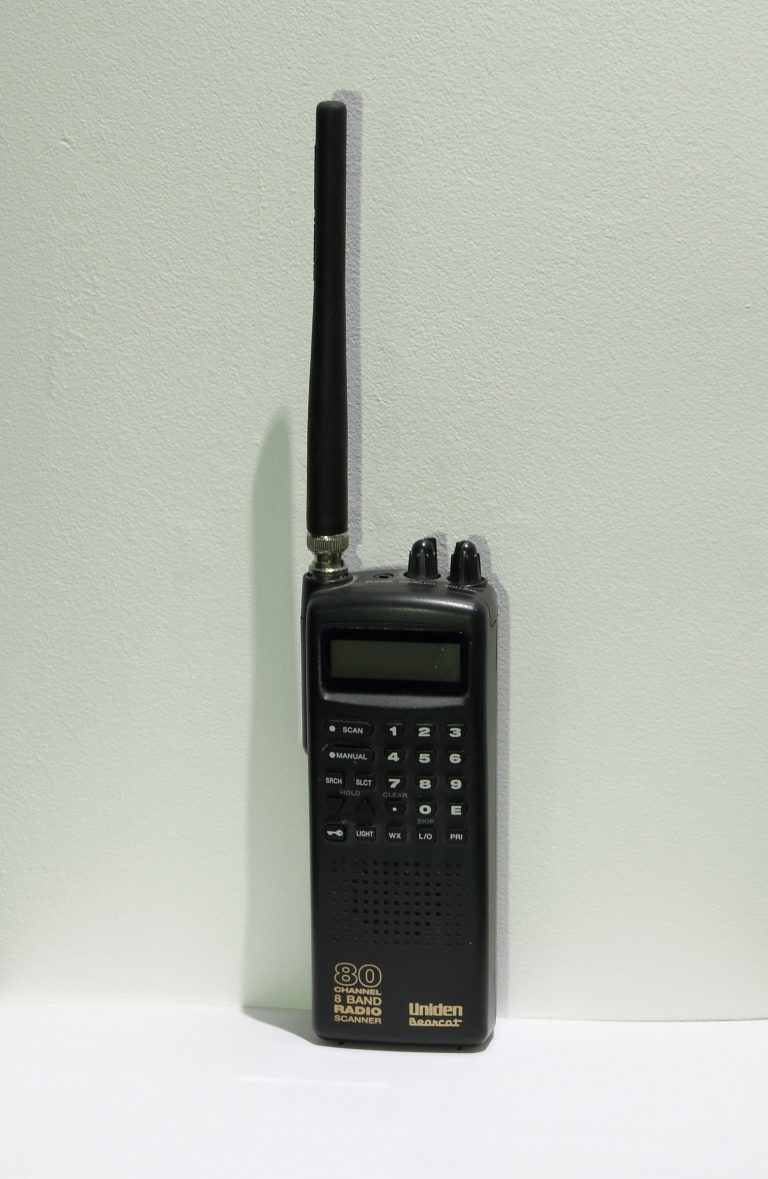
The best police scanners depend on your local radio system. Compare six current digital and P25 scanners, including…