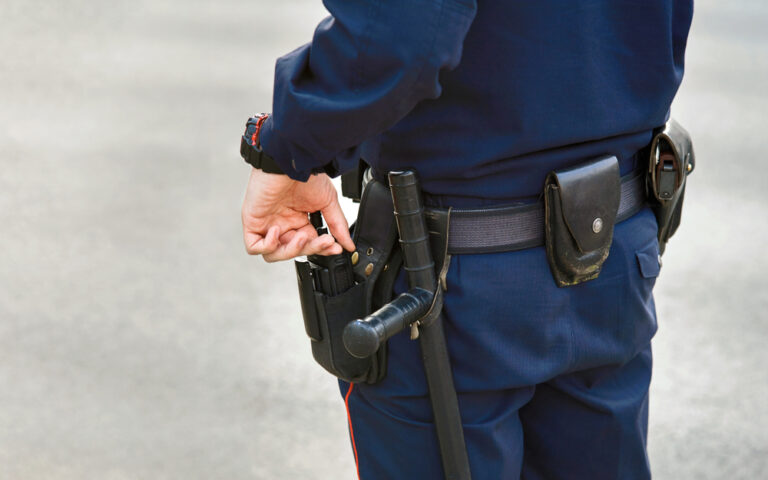
4 Best Radio Holsters for Duty Belts (Police Picks 2026)
Compare four radio holsters and pouches for police duty belts and outer carriers, including Zero9, Bianchi, 5.11 and…


First of all, kudos to you if you’re thinking of starting a job in law enforcement.
It is not a career path that everyone just naturally gravitates to, and not all of those who do actually have what it takes.
After all, being a cop is unlike any regular job; it’s a calling.
Hence, it is crucial to learn what disqualifies you from being a police officer. In this way, you’ll be able to prepare for your application in advance.
Before we move on to talk about the possible factors that can disqualify you from getting a job in law enforcement, allow us to give you a quick walkthrough of the hiring process.
Keep in mind that different law enforcement agencies may differ from each other when it comes to their application process and requirements.
Therefore, it’s still best to do your own research before you start creating that resume.
There is no single nationwide minimum requirement for every police department in the U.S. The U.S. Bureau of Labor Statistics notes that education requirements can range from a high school diploma to a college degree and that candidates usually must be at least 21.
You may also need a valid driver’s license and must meet the department’s physical, personal, background, and legal requirements. Check the agency you actually want to join rather than assuming another department’s rules apply.
We go much deeper into that process in our guide to police background checks for applicants.
If you meet those basic qualifications, the next step usually involves passing an entrance exam.
What that exam will be will depend on the jurisdiction.
The exact test varies. Depending on the agency, the hiring process may include a written or civil-service exam, physical ability testing, interviews, a background investigation, and later academy or state-certification testing.
Most police officers have to graduate from an academy before completing field or on-the-job training. Academy length and structure vary by agency and state, so there is no universal six-month rule. If you want a better idea of what that stage feels like, see our guide to how hard police academy is.
You will probably need additional training and take promotion exams to move forward in your career later on.
For now, meeting the requirements we have mentioned will serve as a solid first step.
We say that it’s the first step because you will also need to undergo a comprehensive background investigation process.
There is no single national list of police-officer disqualifiers. Some barriers come from law, while many others come from state standards or the hiring policy of a particular department.
The background investigation can be extremely detailed and may include criminal history, driving, employment, finances, references, past drug use, honesty during the process, and interviews with people who know you.
The important distinction is whether something is a hard legal bar, a department-specific automatic disqualifier, or simply a negative factor the agency evaluates in context.
One of the first things that a routine background check for a position in law enforcement will go through is, of course, a person’s criminal records.
You do not necessarily need a literally spotless record. Minor traffic or other past issues may be evaluated differently from serious or repeated misconduct, and the rules vary by department.
Felony convictions and qualifying domestic-violence convictions are much more serious. Federal firearms law prohibits firearm possession for several categories of people, including many people convicted of crimes punishable by more than one year and people convicted of a misdemeanor crime of domestic violence. State law and department rules can add other restrictions.
For an armed police position, a legal prohibition on possessing a firearm can obviously become a major barrier. But do not assume every criminal-history question has the same answer nationwide; check the law and the hiring standards that apply to the department you want to join.
You can’t go strolling around with just a pair of handcuffs, right?
Coming from military service or having experience working for another law enforcement agency (regardless of position) is a plus when applying to be a police officer.
However, you will need to at least have a satisfactory record.
For instance, getting a dishonorable discharge from military service is a huge red flag and is commonly considered a permanent disqualification factor.
In line with this, you can expect that they’ll also look into your complete employment history.
So, even if you were discharged from service with honorable conditions but encountered issues with a position you have taken before or after that, it can severely impact your chances.
Some departments review credit history or broader financial responsibility as part of the background investigation. The issue is not simply whether your credit score is low.
Investigators may care more about patterns such as dishonesty, unpaid obligations you repeatedly ignored, fraud, unexplained financial problems, or whether the information you disclose matches the records they find. A difficult financial period is not automatically the same thing as a disqualifying integrity problem.
Driving plays a significant role in the job of a police officer.
That’s why you need to make sure you not only know how to drive but also are a license holder and a responsible driver.
A minor ticket years ago is very different from a recent pattern of dangerous driving. DUI, reckless driving, license suspensions, repeated crashes, or numerous recent violations can seriously hurt an application, but the exact look-back periods and automatic disqualifiers vary by agency.
Being a police officer can be physically and psychologically demanding, so agencies commonly use physical-ability testing and may use medical and psychological evaluations during the hiring process.
That does not mean having a medical condition or disability automatically disqualifies you. EEOC guidance under the ADA says covered employers generally cannot require a medical exam before a conditional job offer, and post-offer medical standards must still be applied lawfully. The practical question is whether you can perform the essential job functions, with reasonable accommodation where required.
Drug testing and questions about past drug use are also common, but policies differ. Current illegal drug use can be disqualifying, while how an agency treats older use depends on its own rules and applicable law.
Departments may also review tattoos, social-media activity, associations, dishonesty, and other conduct that raises questions about judgment or suitability. These rules vary widely. Tattoos, for example, are often allowed subject to content and placement policies rather than banned outright; our guide explains police tattoo policies in more detail.
Whatever the case, you just need to keep in mind that accuracy and honesty are key.
If you have any concerns about past criminal records, lapses in judgment, or anything that can make you look bad (whether it’s on paper or not), you have to come clean about them at the time of application.
We understand that today’s hiring standards can be strict, but making false statements won’t get you anywhere.
Police background checks can sometimes even involve interviews with the people you love and your community.
Therefore, if you have any community issues, it would probably be best to deal with them before handing in your application.
Paving a career in law enforcement is not for the faint of heart.
The selection process might be challenging, but it’s just the beginning of a challenging yet exciting and rewarding journey.
We hope our quick guide that tackles what disqualifies you from being a police officer helps you become one.
Good luck!
Compare four radio holsters and pouches for police duty belts and outer carriers, including Zero9, Bianchi, 5.11 and…
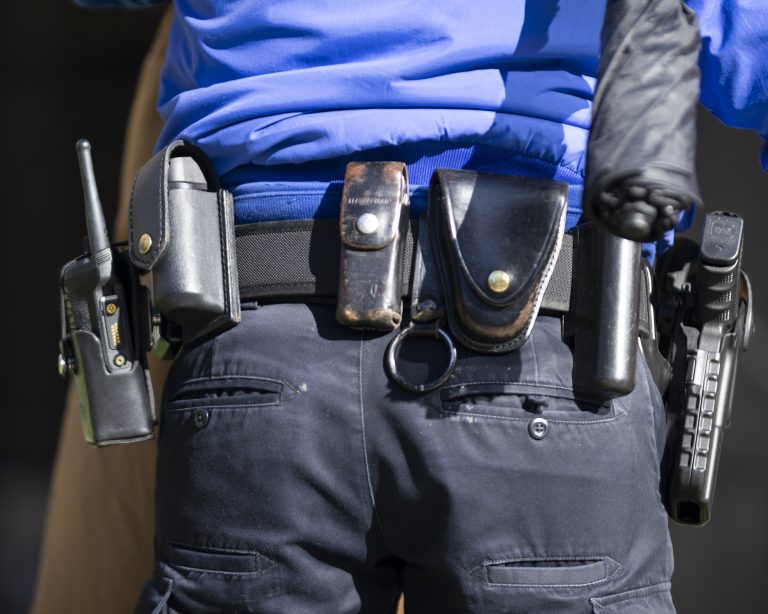
Compare four of the best law enforcement duty belts for police officers, including Bianchi, 5.11 and Condor options.…
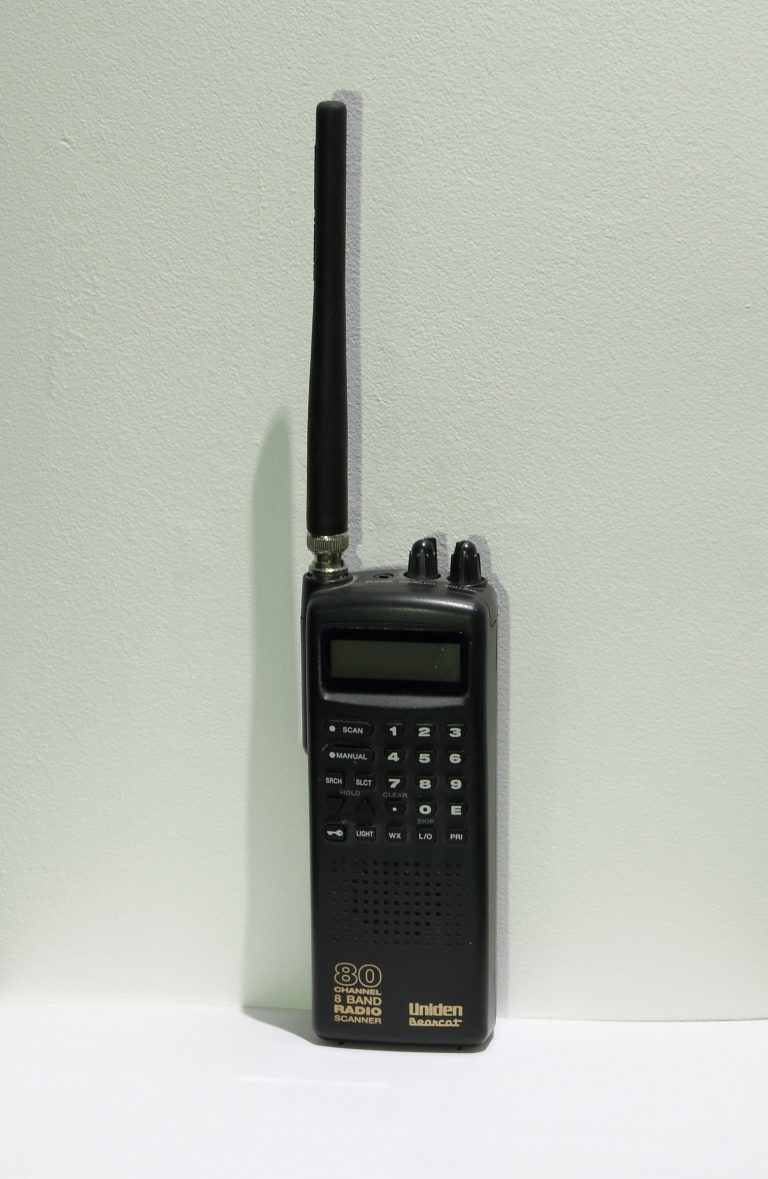
The best police scanners depend on your local radio system. Compare six current digital and P25 scanners, including…