4 Best Radio Holsters for Duty Belts (Police Picks 2026)
Compare four radio holsters and pouches for police duty belts and outer carriers, including Zero9, Bianchi, 5.11 and…

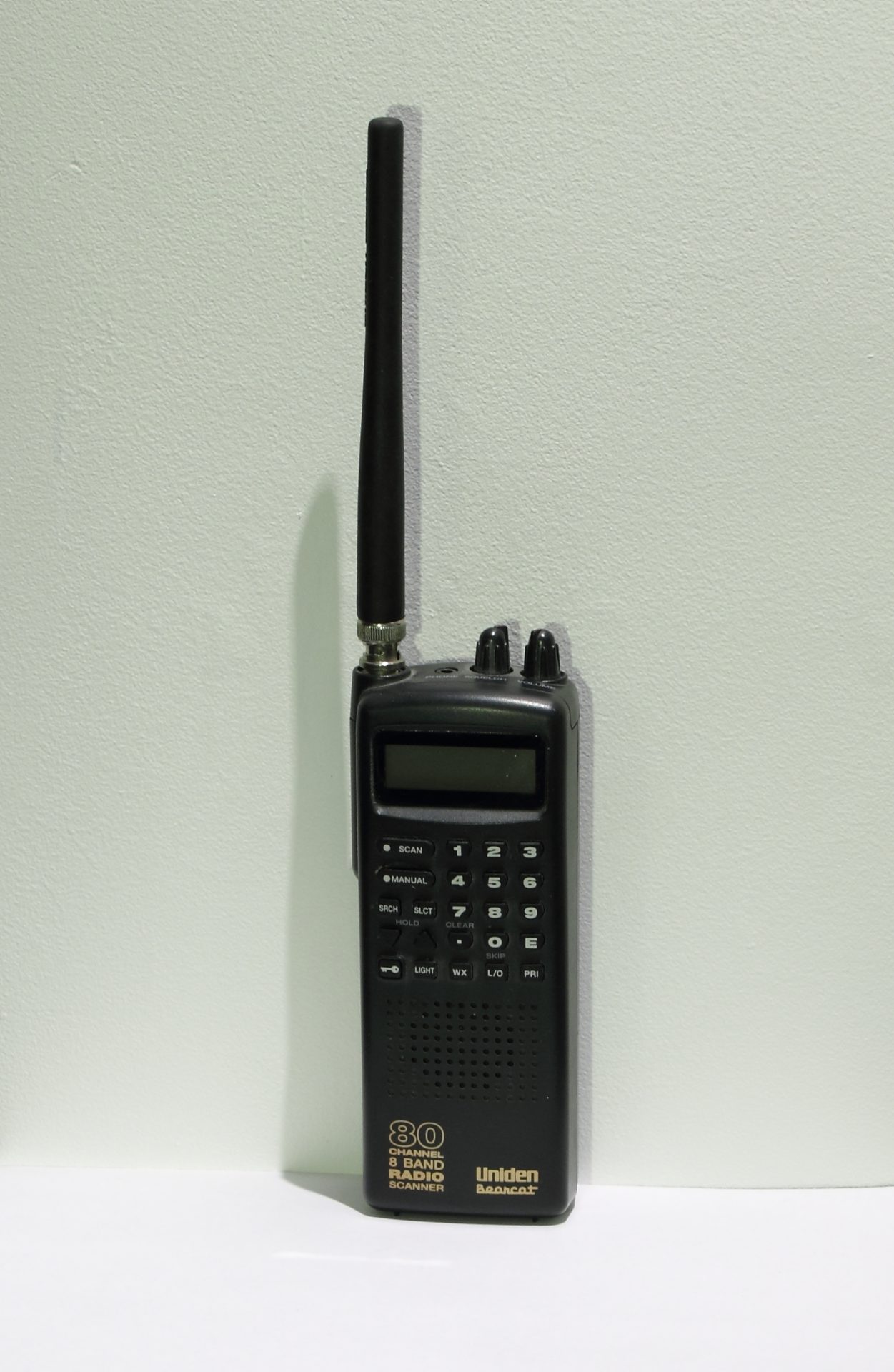
If you are buying a police scanner in 2026, check your local radio system before you buy anything. A $950 scanner cannot decrypt encrypted police traffic, and a cheap analog scanner cannot decode P25 Phase II just because it is marketed as a “police scanner.”
For most buyers who need modern public-safety monitoring, I would start with Uniden’s current digital lineup. The SDS150 is the strongest handheld here, the SDS100 remains a proven portable alternative, and the SDS200 is the one I would choose for a fixed home or vehicle setup where simulcast performance matters.
Affiliate disclosure: As an Amazon Associate I earn from qualifying purchases. Some product links below are paid affiliate links. My recommendations are based on radio-system compatibility, manufacturer specifications, current product information and recurring patterns in owner feedback—not on which product pays the highest commission.
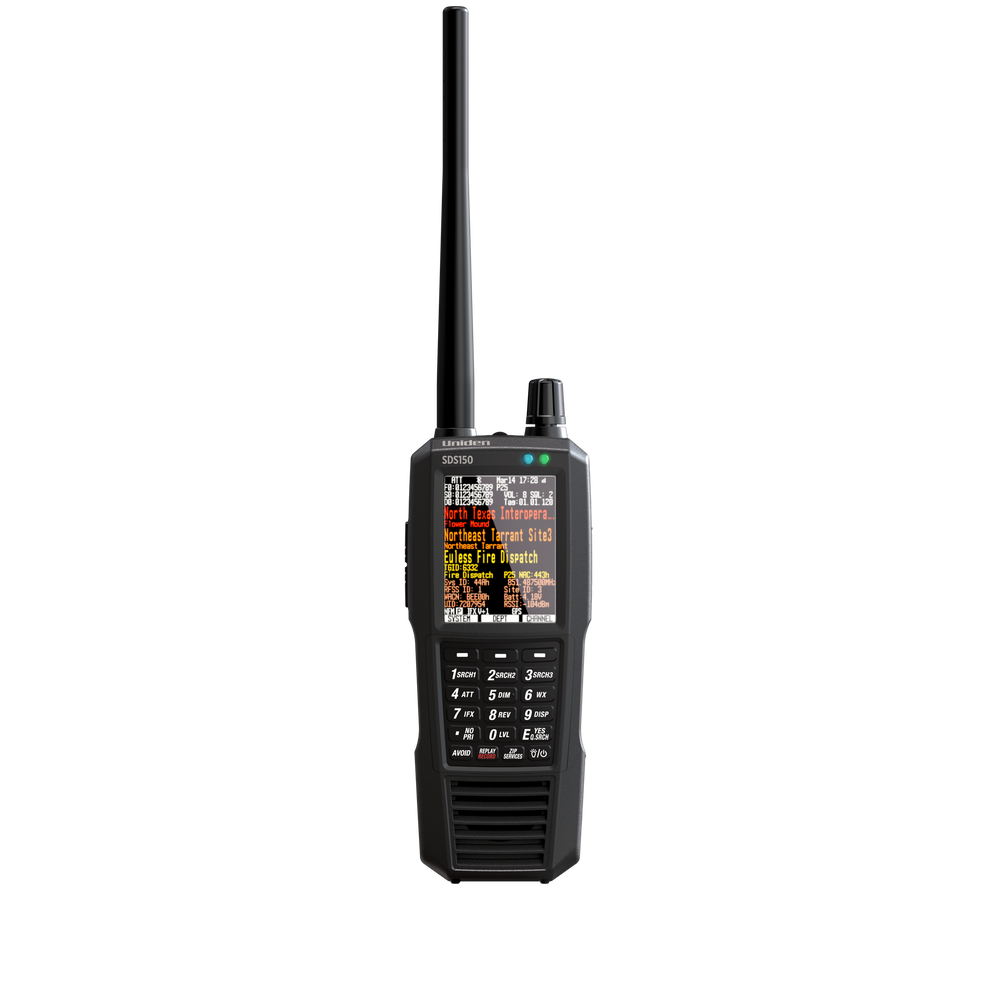
P25 Phase II: Yes | Type: Handheld
Our first choice for a new premium handheld, especially for difficult simulcast systems.
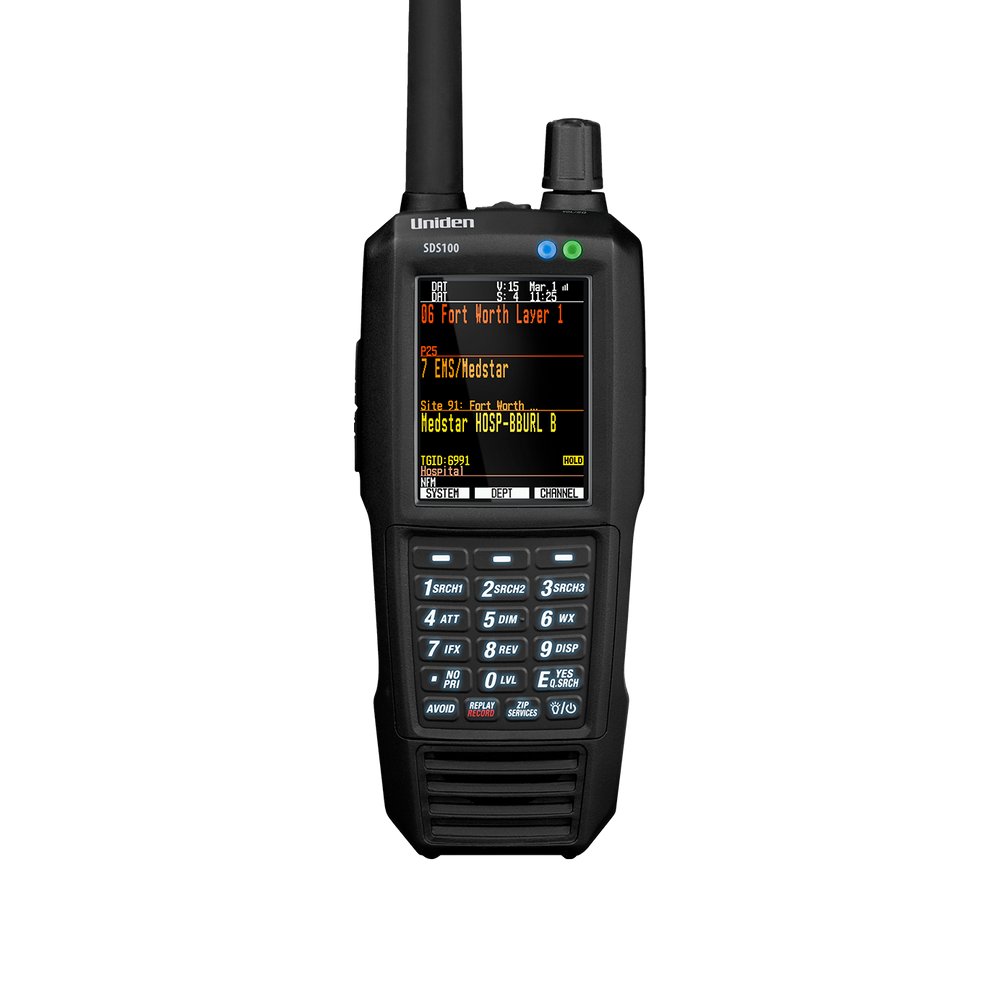
P25 Phase II: Yes | Type: Handheld
A mature, proven alternative when it is meaningfully cheaper than the SDS150.
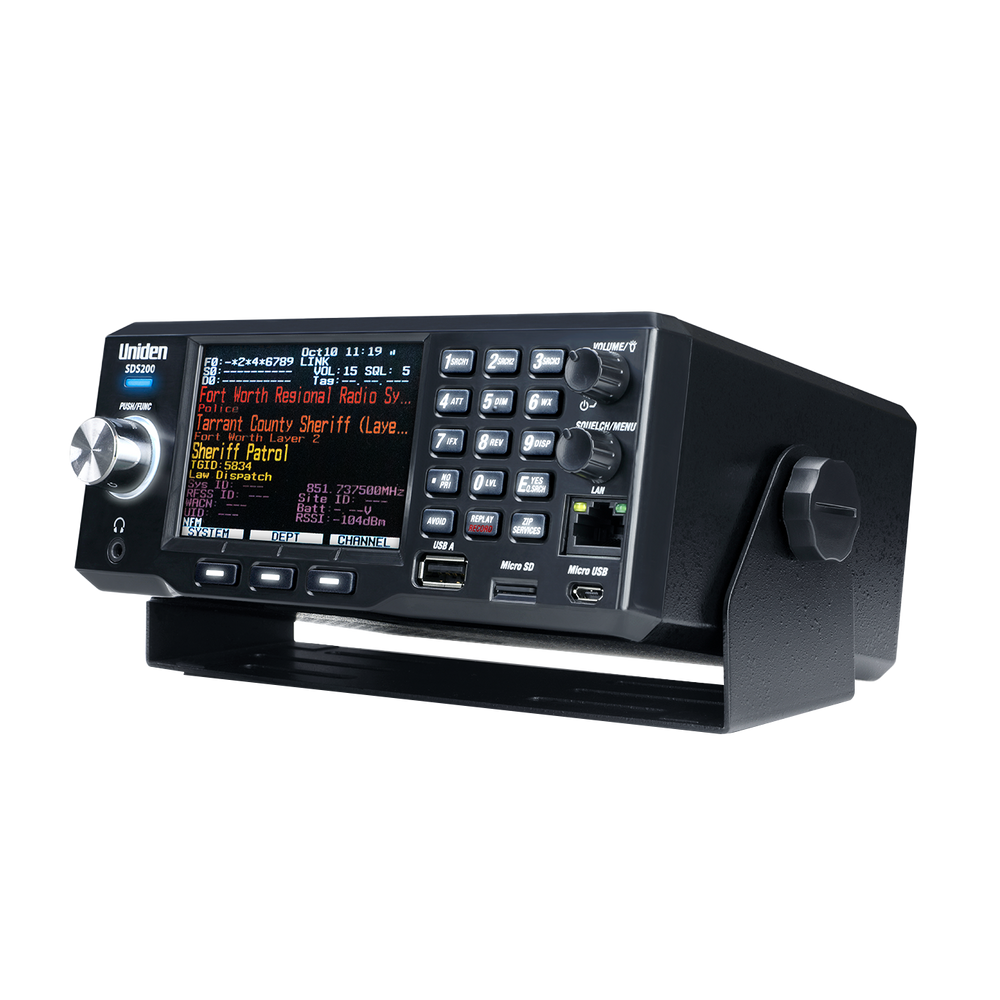
P25 Phase II: Yes | Type: Base/mobile
Our pick for a desk or vehicle setup where portability is not the priority.
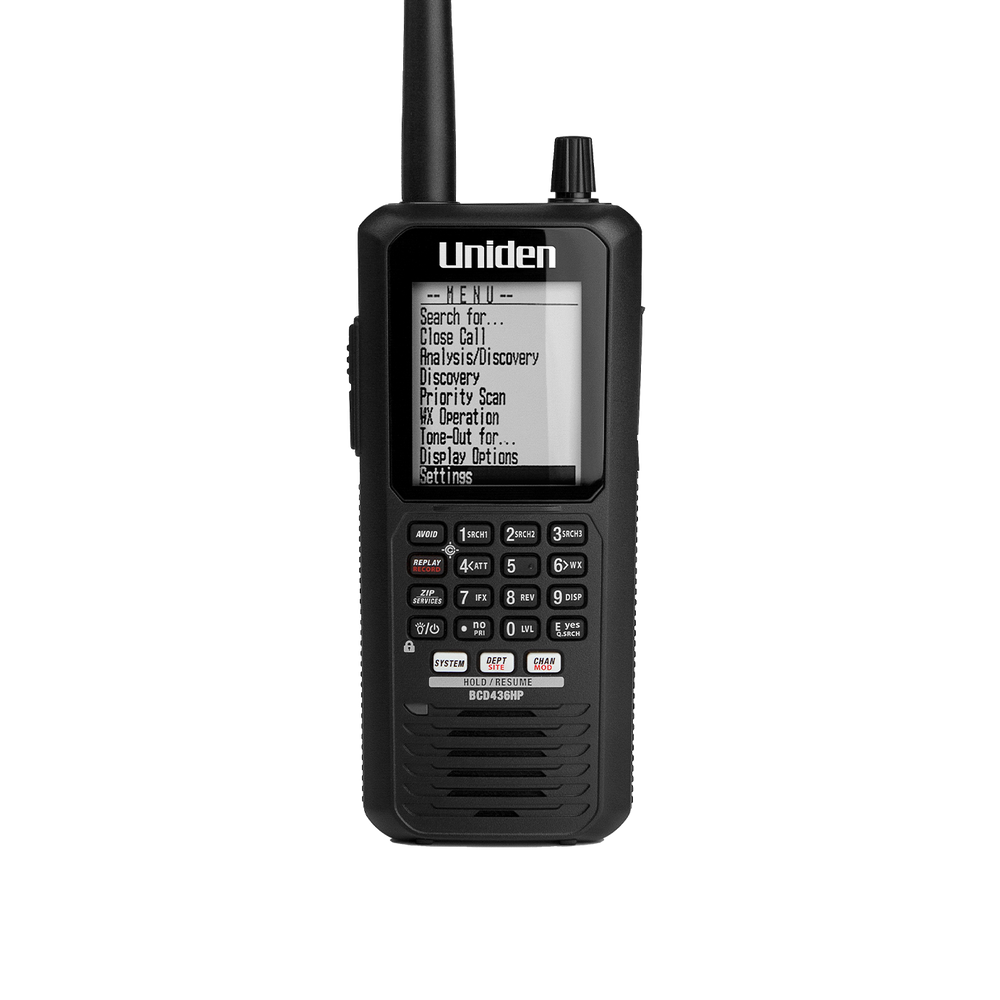
P25 Phase II: Yes | Type: Handheld
A less expensive route to database-driven P25 monitoring when simulcast is not a major problem.
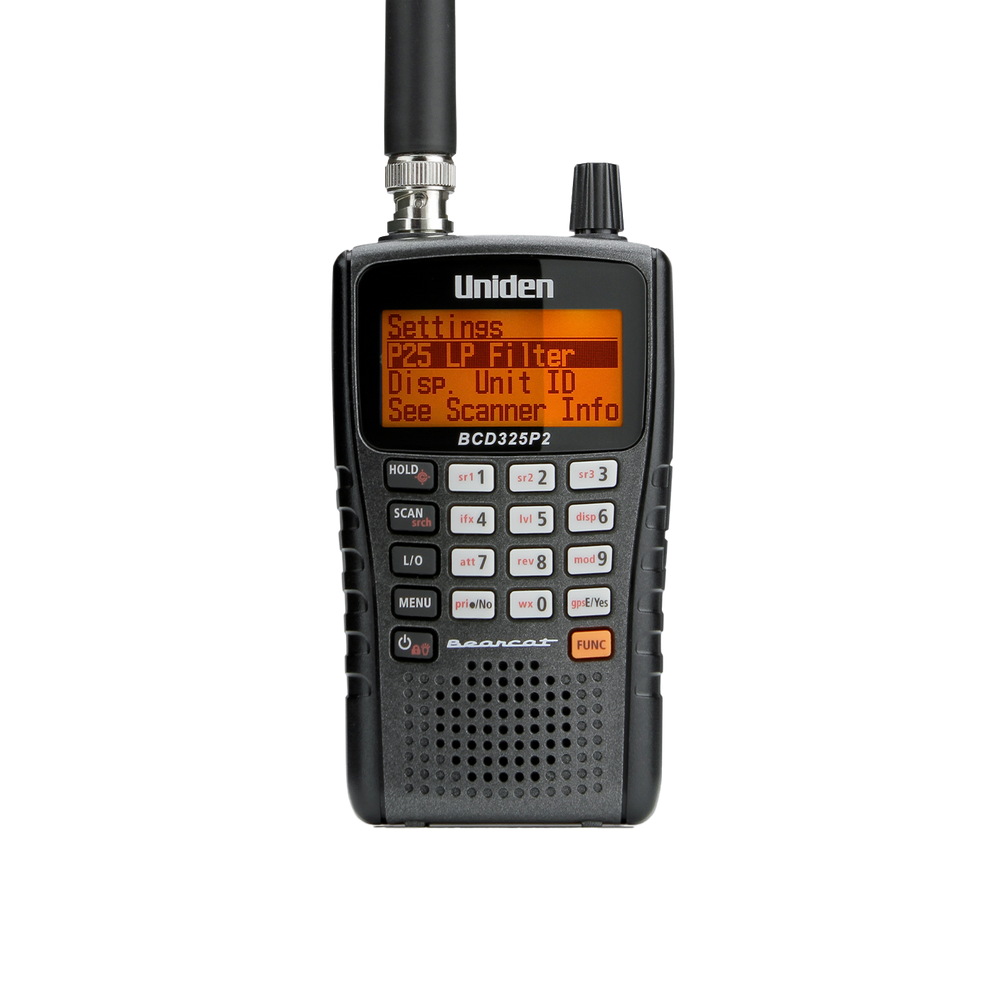
P25 Phase II: Yes | Type: Handheld
Good value for a technically comfortable user who does not need the SDS receiver architecture.
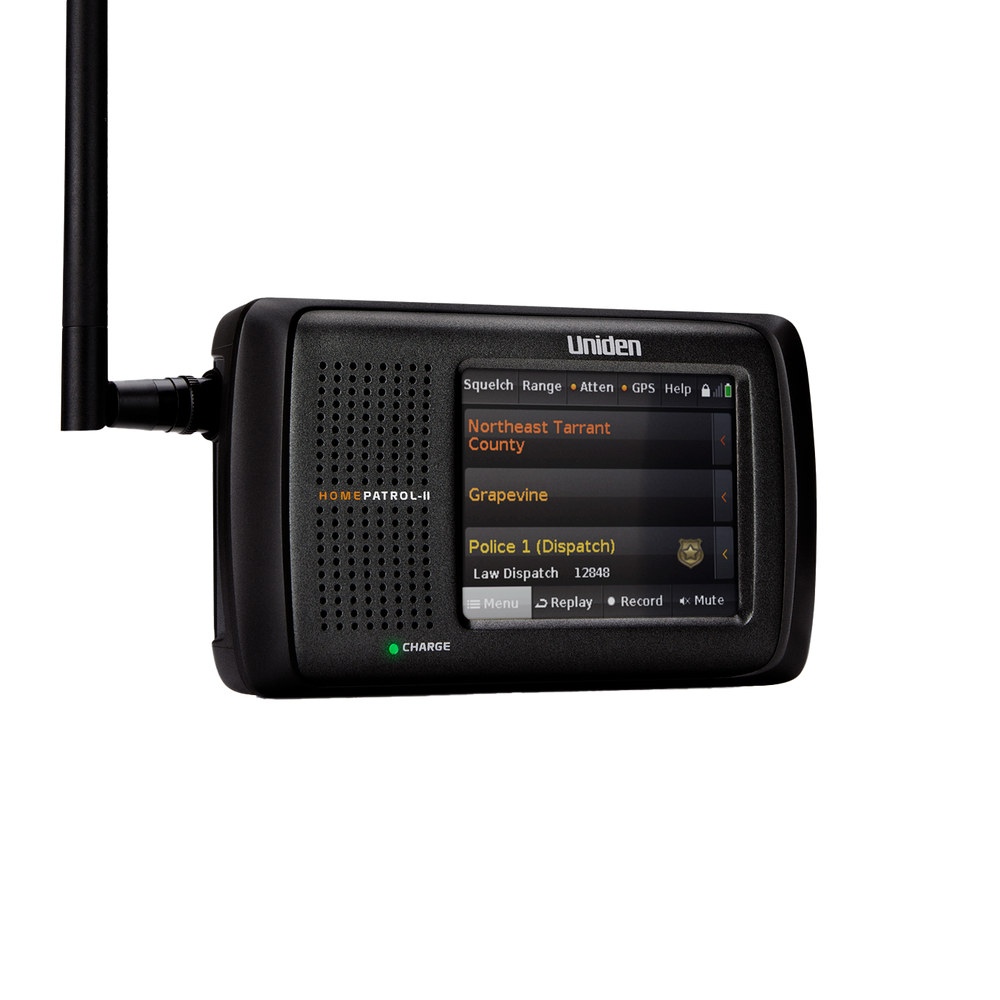
P25 Phase II: Yes | Type: Desktop/portable
The easiest fit here for buyers who prioritize a touchscreen and location-based setup.
Important: P25 support does not mean a scanner can hear encrypted P25 traffic. Encryption is a separate issue.
The Uniden SDS150 is the current flagship handheld and the model I would start with if the goal is to buy once and avoid immediately wishing you had stepped up.
Uniden launched it in late 2025. It uses True I/Q technology aimed at difficult simulcast environments and adds built-in GPS, USB-C, a charging cradle, Bluetooth Low Energy connectivity to the U/AWARE app, an included waterfall feature and IPX4/JIS4 water resistance.
It supports P25 Phase I and II. DMR, NXDN and ProVoice are also supported, but some digital modes require paid upgrades. That matters when comparing the real final cost.
The owner feedback I reviewed is positive about digital reception, audio, build quality, the charging cradle and the easier out-of-box experience. The recurring negatives are the premium price, menu depth and learning curve. Some buyers also dislike the belt clip. Mac users should know that Uniden’s Sentinel workflow remains Windows-oriented.
Best for: Someone monitoring a difficult P25 simulcast system who wants a portable scanner and is willing to pay for the strongest current handheld feature set.
Skip it if: Your local agencies are encrypted, your system is simple enough for a cheaper receiver, or the premium price is hard to justify.
Manufacturer details: Uniden SDS150 specifications.
The Uniden SDS100 is older than the SDS150, but it has years of real-world use behind it and was designed around the kind of simulcast distortion that causes trouble for conventional scanner designs.
It supports P25 Phase I and II, has the USA/Canada database, location-based scanning, recording, a customizable color display and True I/Q reception. Uniden was still issuing current SDS100 software and firmware support in 2026.
The strongest pattern is that owners value reception and simulcast capability. Complaints cluster around value for money, the amount of learning required to get the most from it and battery life.
Best for: P25 simulcast users who want a proven handheld and find it meaningfully cheaper than the SDS150.
Skip it if: The SDS150 is close enough in price that built-in GPS, USB-C and the newer hardware are worth the difference.
If I were building a scanner setup that would mostly stay on a desk or in a vehicle, I would take a hard look at the Uniden SDS200.
It brings True I/Q into a larger base/mobile format, adds a 3.5-inch customizable display and direct Ethernet connectivity for streaming and control. It also uses the USA/Canada database and Sentinel software.
The buyer feedback is strongest around reception and digital decode. Experienced users repeatedly describe it as capable on signals that gave older scanners trouble. The tradeoff is complexity: Sentinel becomes important if you want to get full value from the radio.
Best for: Home or vehicle installations where portability is less important than strong P25/simulcast performance and a larger interface.
Skip it if: You actually need to carry the scanner around.
Manufacturer details: Uniden SDS200 specifications.
The BCD436HP is an older design, but it still fills an important gap. You get P25 Phase I and II, TrunkTracker V and Uniden’s HomePatrol-style USA/Canada database without paying SDS150 money.
The database approach means you can enter a ZIP code and get local systems loaded far faster than with an old bank-style scanner. More advanced users can then build Favorites Lists and narrow the radio down to exactly what they want.
The feedback is split in a useful way. Some buyers love that ZIP-code setup gets them listening quickly. More technical owners point out that the scanner becomes much more capable once you understand Sentinel, Favorites Lists and the system/site/department hierarchy. Recurring complaints include battery life, display readability and the learning curve for deeper programming.
Best for: Buyers who need P25 Phase II and database-driven setup but do not need the SDS series’ strongest simulcast performance.
Skip it if: RadioReference shows that your local P25 system is a difficult simulcast system. That is where I would rather spend more on an SDS model.
The Uniden BCD325P2 is the scanner I would consider when P25 Phase II is mandatory but SDS prices are not.
It supports P25 Phase I and II, TrunkTracker V, 25,000 dynamically allocated channels, Close Call RF Capture and location-based scanning with compatible GPS hardware. What you do not get is the SDS line’s True I/Q simulcast-focused receiver or the BCD436HP’s HomePatrol database workflow.
Amazon buyers repeatedly praise the amount of P25 capability for the money. Programming is the dividing line. Some owners say the system/site/group/channel structure becomes logical once learned; others find manual programming frustrating and move to software such as ProScan. There are also reports that replacing the stock antenna can materially improve reception in some locations.
Best for: A technically comfortable buyer who needs P25 Phase II at a lower price and has checked that local simulcast conditions will not make the cheaper receiver a false economy.
Skip it if: You want the easiest setup possible or live in a difficult simulcast area.
Manufacturer details: Uniden BCD325P2 specifications.
The HomePatrol-2 takes a different approach. It is built around a color touchscreen and location/database scanning rather than looking like a traditional handheld radio.
It supports P25 Phase I and II and is attractive if your main goal is to enter a ZIP code, choose the services you care about and start listening without learning a keypad-heavy scanner first.
Ease of setup is the most consistent positive theme in the Amazon feedback. Owners like the touchscreen, ZIP-code/database approach and ability to separate services and Favorites Lists. Complaints include battery behavior, software/update friction and the fact that “easy” does not eliminate the need to understand what your local radio system actually uses.
Best for: A home user who values a touchscreen and straightforward database-driven setup more than pocket portability.
Skip it if: Your local system has serious simulcast distortion. I would move to an SDS model.
This is the section I would read before clicking any product link.
First, identify the radio system used by the agencies you want to hear. Our guide to what radios police use explains P25, trunking, talkgroups, simulcast and encryption in plain English.
If the agency is fully encrypted, none of the scanners on this list will decrypt it. Buying a more expensive scanner does not change that. Our separate guide explains police scanner legality and why legal reception and technically possible reception are different questions.
If everything you want is conventional analog, you may not need an expensive digital scanner. If the system uses P25 Phase II, an analog scanner is the wrong purchase.
Modern public-safety networks commonly use trunking. A compatible trunk-tracking scanner follows the talkgroup as the system assigns different radio channels.
This is where buyers get burned. A scanner can technically support P25 Phase II and still perform badly on a local simulcast system because multiple synchronized transmitter sites reach the receiver with slightly different timing. The SDS series is designed specifically to handle this problem better than conventional scanner architectures.
If yes, stop. A consumer scanner will not decrypt it. Check whether fire, EMS, dispatch, interoperability or other local talkgroups remain in the clear before deciding whether a scanner still has enough value for you.
Because the cheapest product is not cheap if it cannot receive the system you bought it for.
There are good inexpensive analog scanners. They make sense for aviation, rail, marine, amateur radio, weather and public-safety systems that remain analog. But a buyer searching specifically for a police scanner is increasingly likely to encounter digital trunking and P25.
I would rather tell you to spend nothing than send you to Amazon for a $100 scanner that cannot hear your local department.
Buy a handheld if you want to move around the house, take the scanner outside or travel with it. The SDS150, SDS100, BCD436HP and BCD325P2 are the relevant choices here.
Buy a base/mobile scanner if it will mostly live on a desk or be installed in a vehicle. The SDS200 gives you the strongest receiver architecture in that format.
Buy the HomePatrol-2 if a touchscreen and simple location-based setup matter more to you than carrying the radio on a belt.
Not automatically.
If your local system is conventional or a straightforward trunked system without serious simulcast problems, a BCD436HP or BCD325P2 may do everything you need for less money.
If your target system is a large P25 simulcast network, the SDS150, SDS100 or SDS200 becomes much easier to justify. This is one of those purchases where local system architecture should decide the budget.
No. None of these scanners decrypt encrypted police communications.
Encryption is not the same thing as digital. A P25 talkgroup can be digital and unencrypted, in which case a compatible scanner can receive it. An encrypted P25 talkgroup remains inaccessible to ordinary consumer scanners.
Scanner laws depend on where and how the receiver is used. Federal law is only part of the picture; states can have additional rules, particularly around mobile use or using a scanner while committing a crime. See our full guide to police scanner laws before using one in a vehicle or while traveling.
If I were choosing today, I would use this order:
The best police scanner is not the scanner with the longest feature list. It is the least expensive scanner that reliably receives the unencrypted radio systems you actually want to monitor.
For difficult modern P25 simulcast systems, the SDS family is where I would look first. For simpler P25 systems, the BCD436HP and BCD325P2 can save money. And if the police talkgroups in your area are fully encrypted, save your money entirely.
Compare four radio holsters and pouches for police duty belts and outer carriers, including Zero9, Bianchi, 5.11 and…
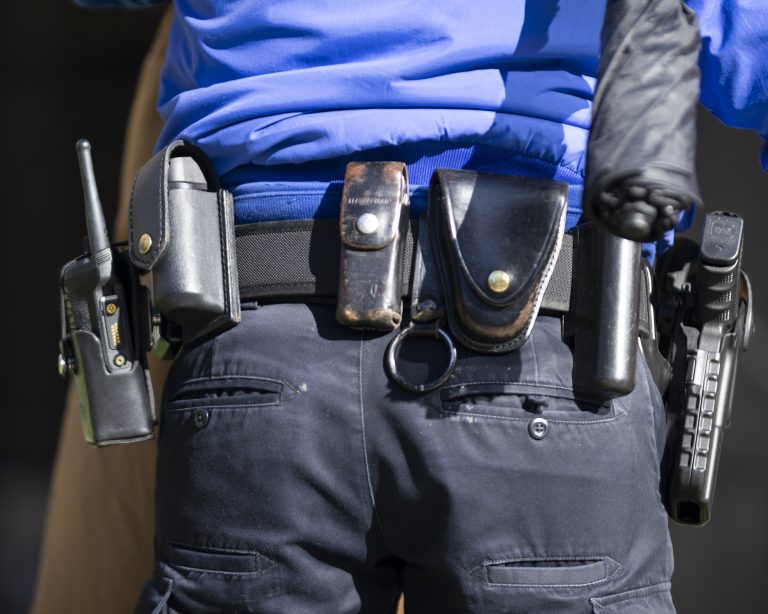
Compare four of the best law enforcement duty belts for police officers, including Bianchi, 5.11 and Condor options.…
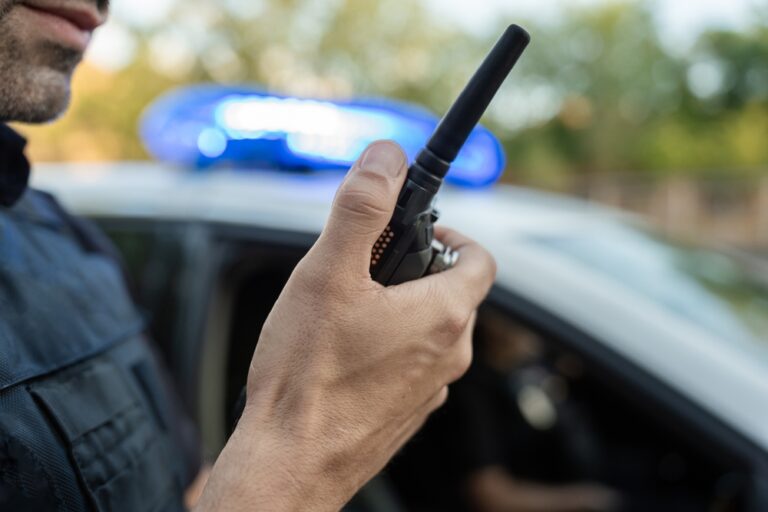
What radios do police use? Learn how police portable and mobile radios work, what P25 and trunking mean,…