4 Best Radio Holsters for Duty Belts (Police Picks 2026)
Compare four radio holsters and pouches for police duty belts and outer carriers, including Zero9, Bianchi, 5.11 and…

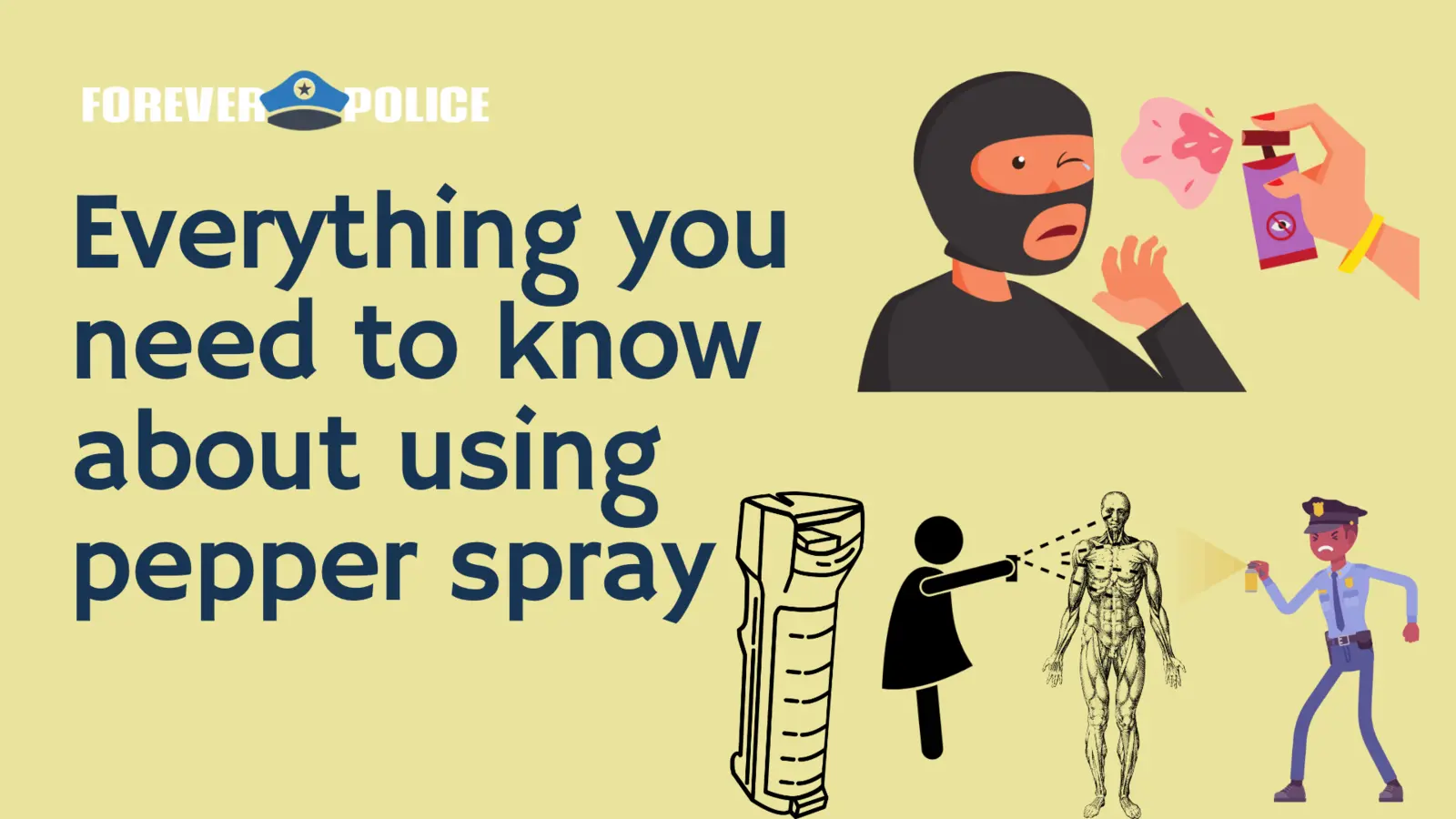
Pepper spray is useful only if you can reach it, operate it under stress and create enough time to get away. The basic sequence is simple: recognize the threat, move if you can, draw the canister, aim across the eyes and nose, use a short burst, then move away and call 911. It is a less-lethal defensive tool—not a guarantee that an attacker will stop.
The details still matter. Spray pattern, wind, distance, local law and the safety mechanism on your particular canister can all change what happens. Read the manufacturer’s instructions and practice with an inert trainer that matches the product you carry.
A canister at the bottom of a purse or buried under other gear may as well be somewhere else. Carry it in the same accessible place each day. Make sure keys or loose objects cannot press the trigger, and use the supplied safety or a suitable holster.
Leaving is better than spraying when a safe exit is available. If the situation allows it, move away, put an obstacle between you and the threat, and give a firm verbal warning. You may not have time for any of that during a sudden attack, but distance gives you more room to react and reduces the chance of a grab.
A firm grip with the thumb operating the actuator is usually more secure than balancing a small canister on one finger. The exact mechanism varies, so learn yours without looking at it. Do not assume every twist lock, flip top or slide safety works the same way.
Follow the label for the product’s range and pattern. Aim across the eyes and nose rather than at one tiny point. A short, controlled burst preserves some spray if the first attempt misses. Wind, movement and stress make the advertised maximum range a poor place to test your accuracy.
Do not stand still to watch the result. Move away from the line of attack, get to a safer place and call 911. Be ready for the possibility that the person can still see, run, grab or use a weapon. Pepper spray creates an opportunity to escape; it does not make the scene safe by itself.
Self-defense law varies, but the general question is whether you reasonably faced an imminent threat and whether the force used was proportionate. A verbal insult or ordinary argument is not enough. Spraying someone as punishment, after the danger has passed, or to win a minor confrontation can lead to criminal and civil consequences.
Possession rules also vary by state and locality. Age, canister size, formulation, purchase method and prohibited locations may be regulated. Check the current law where you live and anywhere you travel; the separate guide to U.S. pepper spray laws by state is a starting point, not a substitute for current local law.
A knife or gun makes the situation far more dangerous. Pepper spray does not reliably prevent an armed attacker from using the weapon, and attempting to draw a canister may cost time. Escape, barriers and immediate police assistance should be the priority whenever they are available.
Use an inert training canister rather than live OC spray. Practice finding it, releasing the safety, presenting it with a stable grip and moving away after a short burst. Do this somewhere that permits training and where nobody can mistake the exercise for an attack.
Check the expiration date and inspect the canister periodically for corrosion, leakage or damage. Some manufacturers advise a brief test spray; others do not. Follow the instructions for the exact product rather than a generic internet rule about shaking or testing it.
A cone or fog gives wider coverage but is more vulnerable to wind and indoor contamination. A stream is more directed. Gel usually creates less airborne cross-contamination and may offer longer labeled range, but its narrow stream demands better aim. The full pepper spray vs. pepper gel comparison covers those tradeoffs.
Move into fresh air and away from the source. Do not rub the eyes. Remove contact lenses and do not put them back in. Rinse irritated eyes with plenty of plain water for 10 to 15 minutes, and wash exposed skin with soap and water. Contaminated clothing can keep transferring the irritant.
The CDC’s current guidance for riot-control-agent exposure recommends fresh air, removing contaminated clothing, washing the body and seeking medical care when needed. Call 911 for breathing difficulty, severe eye pain, persistent symptoms or any other medical emergency. In the United States, Poison Help is available at 1-800-222-1222.
There is no single range. Small civilian products commonly advertise distances around several yards, while larger units may reach farther. Pattern and canister design matter as much as the category. Use the labeled effective range for your own product, not a general number from another canister.
That depends on capacity and burst length. A small keychain model may provide only a handful of short bursts. Do not assume a partly used canister is still full or dependable; follow the manufacturer’s replacement guidance.
No. A poor hit, glasses, wind, distance, intoxication and individual reaction can reduce the effect. Even a person with severe eye irritation may remain mobile. Your plan should be to disengage, not to wait for a particular reaction.
Only if the instructions for that specific product say so. Formulations and dispenser designs differ. Guessing is unnecessary when the manufacturer’s label gives the correct procedure.
No. Deodorant is not designed or tested as a defensive irritant. It may fail, force you to remain dangerously close and escalate the confrontation.
Choose a lawful product from a reputable manufacturer, carry it where you can reach it and practice with an inert trainer. Know the range, pattern and safety mechanism. If you ever have to use it, the objective is simple: create a chance to escape and get help.
Compare four radio holsters and pouches for police duty belts and outer carriers, including Zero9, Bianchi, 5.11 and…
Compare four of the best law enforcement duty belts for police officers, including Bianchi, 5.11 and Condor options.…
The best police scanners depend on your local radio system. Compare six current digital and P25 scanners, including…