What Radios Do Police Use? Police Radio Systems Explained
What radios do police use? Learn how police portable and mobile radios work, what P25 and trunking mean,…

A tourniquet is one of those pieces of equipment you hope you never have to use. If the need arises, however, it has to work—and you have to know how to use it before the situation becomes chaotic.
I am a police officer, not a medical professional. My perspective here is based on carrying, handling and training with the two models I know: the CAT and the SOFTT-W. This is a tourniquet review from a police equipment point of view, not a substitute for medical training or your agency’s protocol.
I would choose a genuine CAT for my own patrol bag. I find its hook-and-loop strap straightforward, and familiarity matters when fine motor skills are not at their best. The SOFTT-W is also a serious option, and another officer may prefer its buckle and strap arrangement.
I am limiting this comparison to those two models because they are the ones I am familiar with. I do not wish to market such a vital piece of police equipment without being familiar with it. It is, after all, a life-or-death choice.
Whichever model you choose, buy a genuine product from the manufacturer or an authorized dealer, train with the same model and keep the training tourniquet separate from the one you carry for emergencies.
TQ is simply shorthand for tourniquet. An emergency tourniquet is designed to control life-threatening bleeding from an arm or leg by restricting blood flow. It is not a general-purpose bandage, and it is not a substitute for professional medical care.
Recognizing life-threatening bleeding and choosing the correct method are skills that should be learned hands-on. The American College of Surgeons’ STOP THE BLEED training covers direct pressure, wound packing and tourniquet use. For police officers, agency medical training and local protocol come first.
If you face a real emergency, call 911 or your local emergency number as soon as circumstances allow and follow your training and the instructions from emergency personnel. Record the application time if your training calls for it. Do not loosen or remove an applied tourniquet merely because it is painful; that decision belongs to qualified medical personnel unless your own current protocol specifically says otherwise.
In many cities, the ambulance reaches a crime scene or accident about as fast as the police. Why can’t they administer the TQs while we do the REAL police work?
There are plenty of reasons. Police may arrive first. You may work in a rural area where paramedics are farther away. Communications may be poor. A violent or unstable scene can also delay medical access while officers are already inside it.
As a cop, you often put yourself in harm’s way. A tourniquet may be needed for a member of the public, a colleague or yourself. That is why it makes little sense to carry one without practicing self-application as well as application on another person. The middle of an emergency is too late to ask a colleague how the buckle works.
A tourniquet also has to be reachable. A perfectly packed medical kit in the trunk is of limited use if the officer who needs it cannot get there. Some officers keep one on the duty belt or plate carrier; others carry it in an accessible section of a patrol bag. Placement should match your assignment, equipment and department policy.
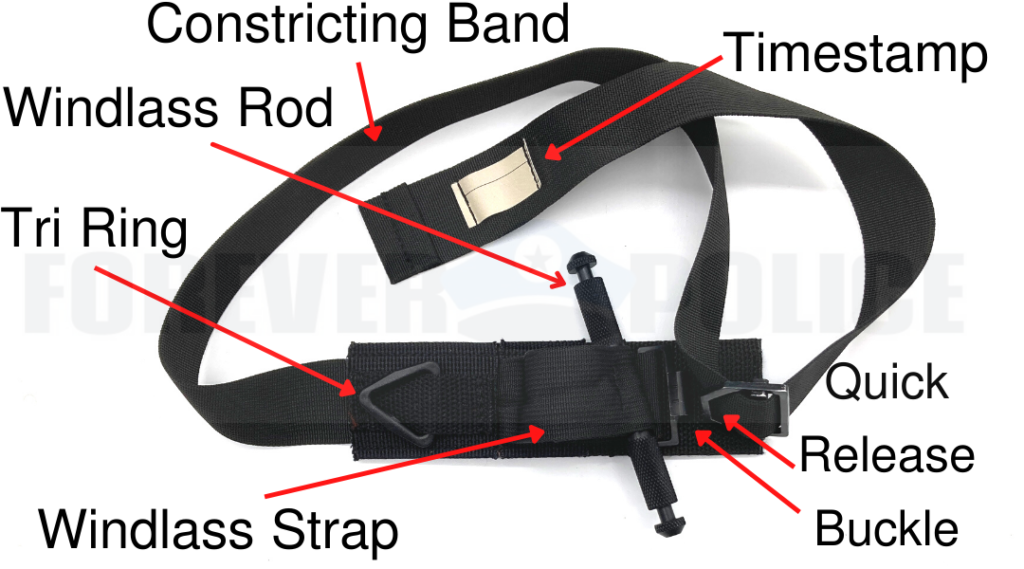
Both are windlass-style limb tourniquets. They achieve the same basic purpose, but their strap, buckle and securing arrangements feel different in the hands. That practical difference matters more to me than specifications on a product page.
The CAT uses a hook-and-loop strap and a windlass. I personally prefer this system because I find it easier to get the strap snug before using the windlass. In a stressful situation, I want the model whose sequence I know without having to think through every component.
That is a personal preference, not a claim that the CAT is automatically the best tourniquet for every officer or agency. Training, approved equipment lists and the ability to use the device correctly matter more than the logo.
The SOFTT-W uses a different buckle and strap arrangement, with metal hardware. Some users prefer that construction and the way it packs. I have handled and trained with it, but I do not find it as intuitive as the CAT for me.
The old version of this article described the SOFTT-W’s strap in a confusing way. “Velcro” is a brand name for a type of hook-and-loop fastening, so presenting those as two different systems was not useful. The real question is how the complete buckle-and-strap system works for the trained user.
For my own use, CAT. That answer comes from familiarity rather than a laboratory comparison. If an agency issues the SOFTT-W and trains its officers thoroughly with it, that common equipment and training may be more valuable than an individual’s preference.
This is not a product where I would look for the cheapest unrecognized brand. In 2018, INTERPOL issued an orange notice after a counterfeit tourniquet’s windlass reportedly broke while the device was being applied at a traffic accident. The warning is still available through the U.S. Department of Justice.
Most cops know that if there is money to be made, someone will try to make money from people looking to save a few dollars. With a tourniquet, the consequences of a fake are unusually serious. Buy directly from the manufacturer or an authorized dealer, and check the manufacturer’s guidance on identifying genuine products.
I previously suggested making your own if a commercial tourniquet was outside the budget. I no longer stand by that advice. Improvised methods belong in proper emergency training, not in a buying recommendation, and a homemade device should not replace a proven tourniquet in a patrol bag or police first aid kit.
Tourniquets are commonly sold in black, orange and blue. Black is the traditional “tactical” choice and blends with most police gear. I do not share the idea that black is always the best color for patrol use.
I often keep mine in my patrol bag. Most of the other gear in that bag is black or dark blue, making a black tourniquet surprisingly hard to find. My orange TQ virtually lights up between everything else. It may also be easier for medical personnel to spot in a chaotic scene.
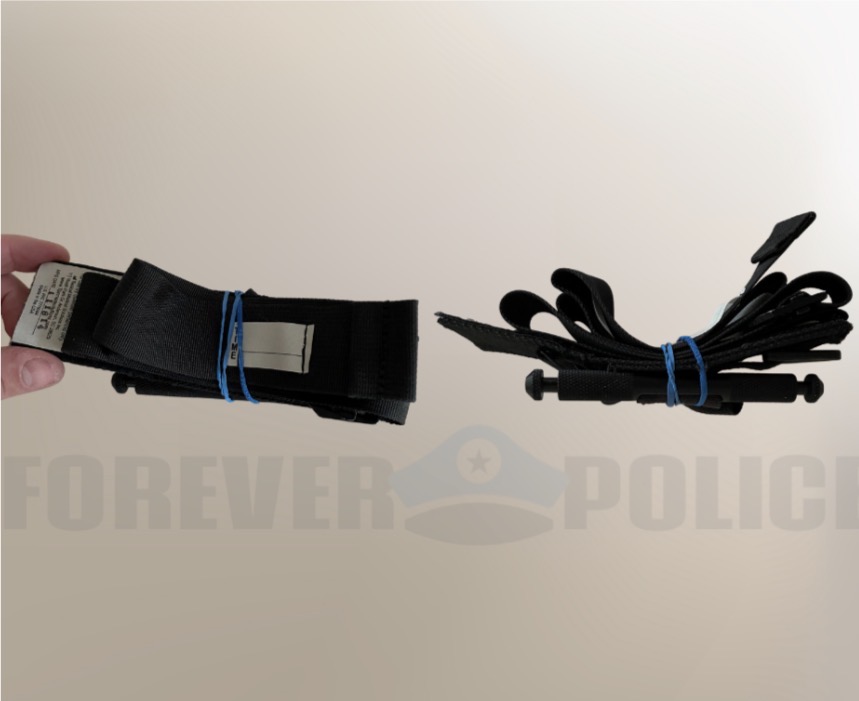
Fold it together, as shown in the picture below. Use rubber bands to keep it in place.
Blue tourniquets are normally associated with training. The same color convention is familiar from blue training guns, knives, batons and spray canisters. A training tourniquet may have been tightened repeatedly, so I would not put it back into operational service. Keep the trainer clearly separated from the emergency device.
However you carry it, protect it from unnecessary sunlight, moisture, dirt and abrasion. Inspect it according to the manufacturer’s instructions and replace it if it is damaged, contaminated or of uncertain origin. Do not bury it under loose equipment. The right pouch or bag location is the one you can reach quickly with either hand and that complies with your agency’s policy.
Yes. An effective tourniquet is tightened firmly enough to stop life-threatening bleeding, so pain is expected. Pain alone is not a reason for an untrained person to loosen a tourniquet that was applied for a genuine emergency. Get emergency medical help and follow current training.
There is no responsible universal countdown for a non-medical article to give. The priority is to control life-threatening bleeding and transfer the person to professional care as quickly as possible. Note the application time and leave removal or conversion decisions to qualified medical personnel and the applicable protocol.
A standard emergency tourniquet is not routine first aid for a snakebite and can worsen local tissue damage. Call emergency services or poison control and follow their instructions rather than improvising treatment.
Every police officer should have rapid access to a genuine tourniquet and, more importantly, current training in how and when to use it. I prefer the CAT because I know the system and find it easier to work with under stress. The SOFTT-W remains a credible alternative for someone trained and comfortable with it.
Do not let a “best tourniquet” list replace hands-on practice. Choose approved equipment, keep the operational device protected and accessible, and train with a separate unit. For the rest of the bag, see my practical police patrol bag checklist and the broader police gear list.
What radios do police use? Learn how police portable and mobile radios work, what P25 and trunking mean,…
There is no single national police written exam. Learn how tests such as PELLETB and NTN FrontLine differ,…
Police field training bridges the gap between academy and solo patrol. Learn what FTO means, how phases and…