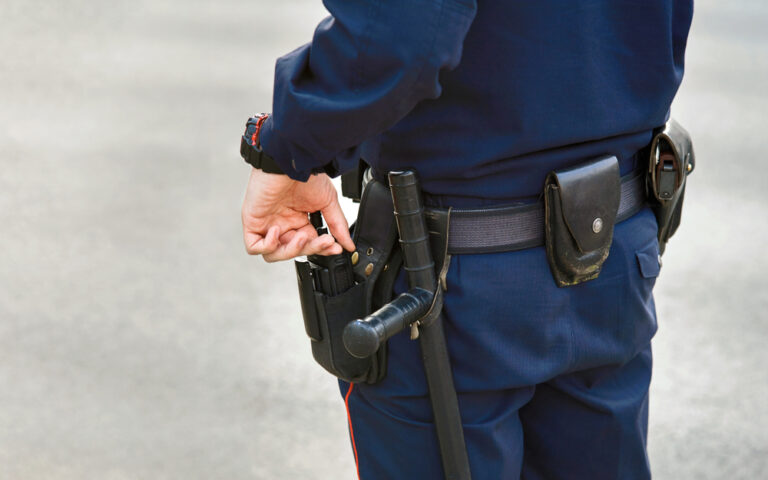
4 Best Radio Holsters for Duty Belts (Police Picks 2026)
Compare four radio holsters and pouches for police duty belts and outer carriers, including Zero9, Bianchi, 5.11 and…

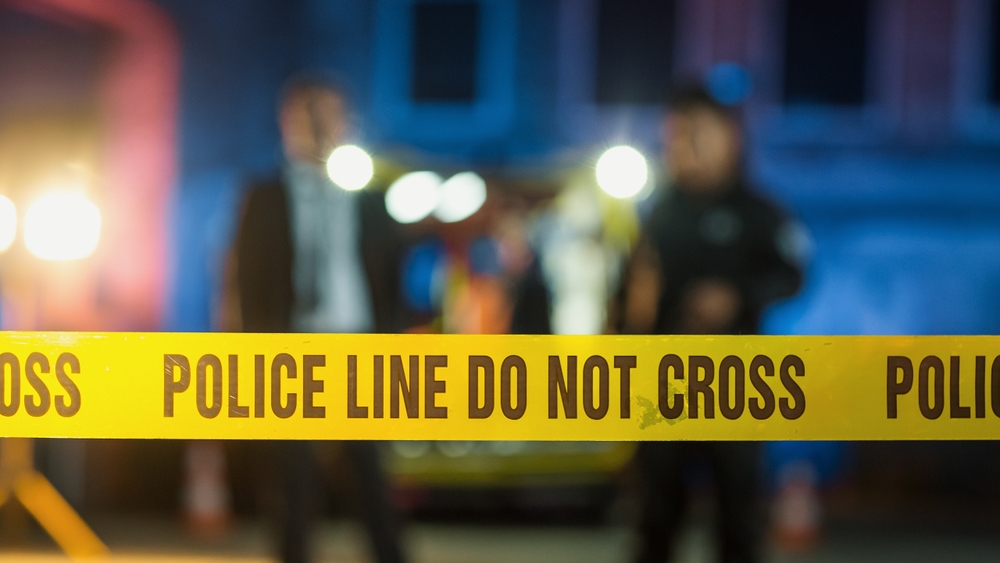
Police tape—often called crime scene tape—is there for a simple reason: to create a boundary people can see. It may protect evidence, keep bystanders away from a hazard, give emergency crews room to work, or do all three at once.
At a crime scene, that boundary matters. Footprints get walked over, small objects are moved, and people naturally touch things without thinking about it. Bright, non-adhesive tape marked “Police Line – Do Not Cross” or “Crime Scene” gives officers a quick way to limit that traffic while investigators document and collect evidence.
The words printed on the tape—and any direction from an officer—matter more than the color. There is no single nationwide color code that lets a bystander identify exactly what happened just by seeing yellow, red, blue, green, or orange tape.
Not every roll of warning tape is “crime scene tape,” even when it appears at a police incident. The label on it usually tells you more than the plastic color.
Police line or crime scene tape marks a perimeter. It is commonly yellow because yellow is easy to see, but departments can use other colors or printed warnings.
Biohazard or HAZMAT tape warns about a specific safety problem. Fire line, traffic control, restricted access, and search-area tape may be used by police, firefighters, public works, or search teams to control movement around an incident.
Evidence tape is different. It is normally adhesive and tamper-evident. Investigators use it to seal bags, boxes, doors, or containers so that a broken seal can be documented. Barrier tape creates a perimeter; evidence tape helps show whether packaged or secured evidence has been opened.
The exact equipment and procedure vary by agency. The underlying job does not: control access, protect people, and preserve the scene. The NIST/NIJ crime-scene guide likewise treats scene boundaries and evidence preservation as basic parts of the first response.
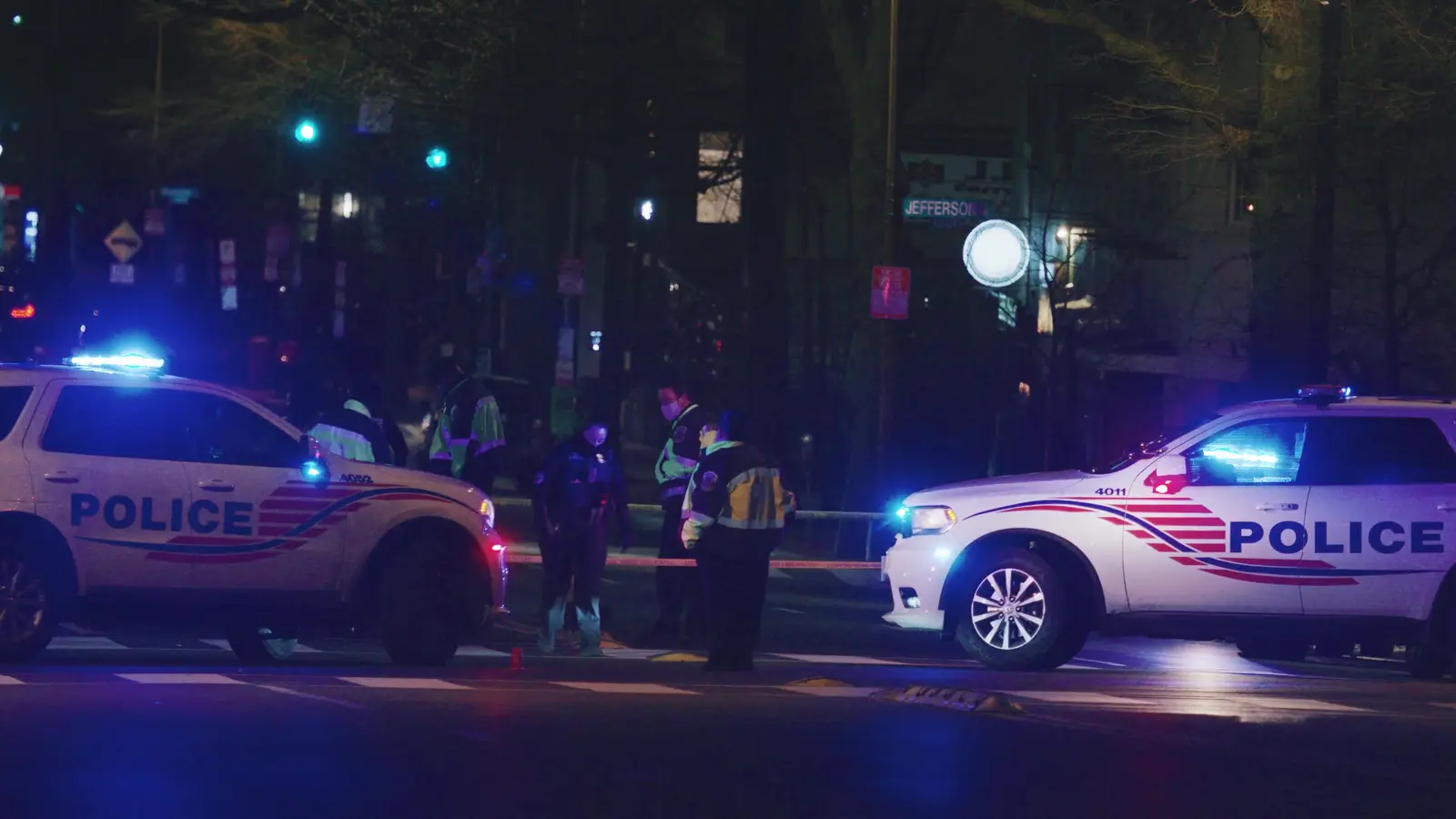
Do not assume the tape is merely a suggestion. If you need to reach a home, car, business, or family member inside the perimeter, find an officer and ask where you can wait or whether access can be arranged.
The legal result of crossing a police line depends on the jurisdiction and on what the person actually does. It may involve trespass, obstruction, failure to obey a lawful order, or evidence tampering. Some places also have a law aimed directly at police lines. Virginia Code §18.2-414.2, for example, makes knowingly crossing or remaining within an established police line without authorization a misdemeanor.
That does not mean every accidental step over every strip of tape produces the same charge. Circumstances matter. But moving the tape, ignoring an officer, or entering far enough to disturb evidence can turn a poor decision into a serious problem. Seattle Police’s public guidance gives the practical rule: stay outside the perimeter and follow the directions given at the scene.
If you are trying to understand why investigators may need access to a particular place, our article on why a detective might come to your house covers several common reasons.
The honest answer is that color by itself is not a reliable incident code. Agencies buy different products, use tape for different jobs, and may put more than one color around the same scene. Look at the printed warning and listen to the officer controlling the perimeter.
Yellow is the color most people recognize as police or crime scene tape. Usually it means that access is restricted. It does not tell you whether the incident is a burglary, collision, shooting, suspicious package, or something else.
Red or red-and-white tape may be chosen for a stronger warning, an inner perimeter, a hazard, or simply because that is what an agency stocks. It is not a universal code for a particular crime.
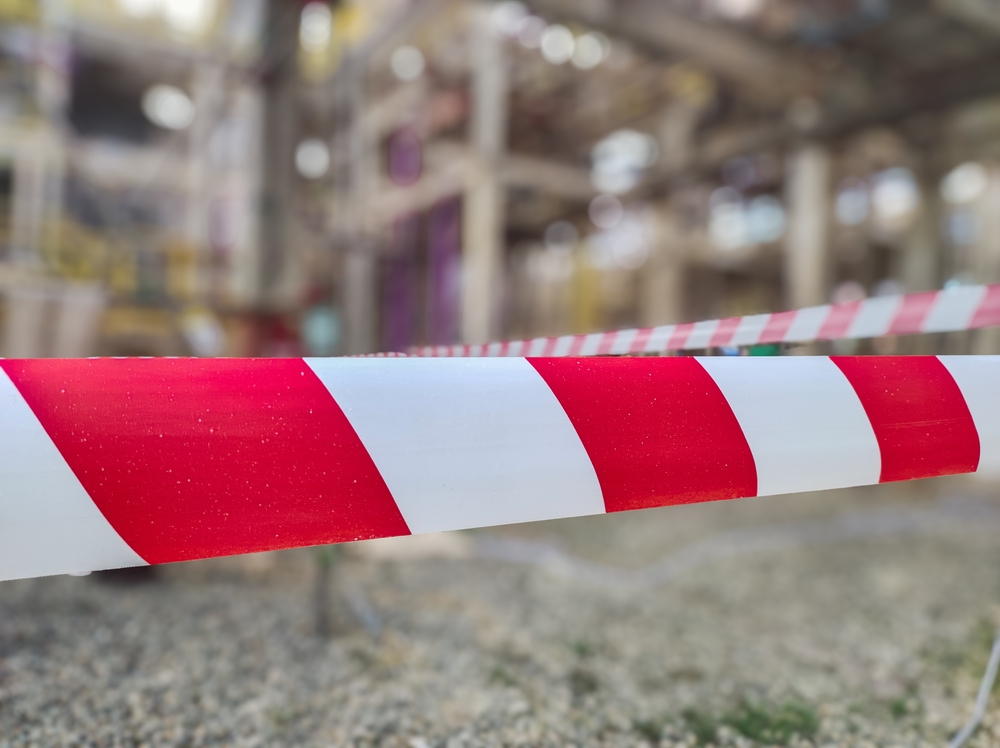
No. Red police tape does not automatically mean that someone died. A fatal incident can be behind yellow tape, and red tape can be used where nobody was killed. Seeing red may understandably feel more alarming, but the color is not enough to identify what happened.
These colors are even less useful as a nationwide key. Blue may be an agency choice; green may mark a search, training area, or another operational purpose; and orange is often used around traffic, construction, utilities, or hazards. None of them reliably means “safe,” “minor,” or one particular kind of police event.
There is no standard time limit. A small scene may be released after photographs, measurements and evidence collection are finished. A homicide, fire, hazardous structure or large search area can remain restricted much longer. The tape should stay in place until the agency responsible for the scene removes it or clearly releases the area.
Read the tape, stay outside it, and ask before entering. A perimeter may be larger than the visible evidence because officers need room for witnesses, emergency vehicles, investigators, and safe movement. It may also change as they learn more.
Police tape is a simple tool, not a complete explanation of the incident. Its message to the public is the part that matters: stop here until the people managing the scene say otherwise.
Compare four radio holsters and pouches for police duty belts and outer carriers, including Zero9, Bianchi, 5.11 and…
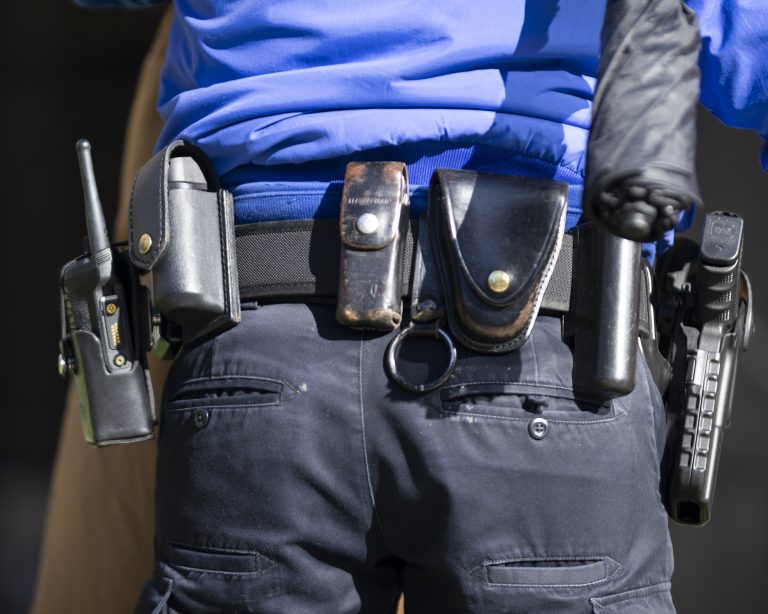
Compare four of the best law enforcement duty belts for police officers, including Bianchi, 5.11 and Condor options.…
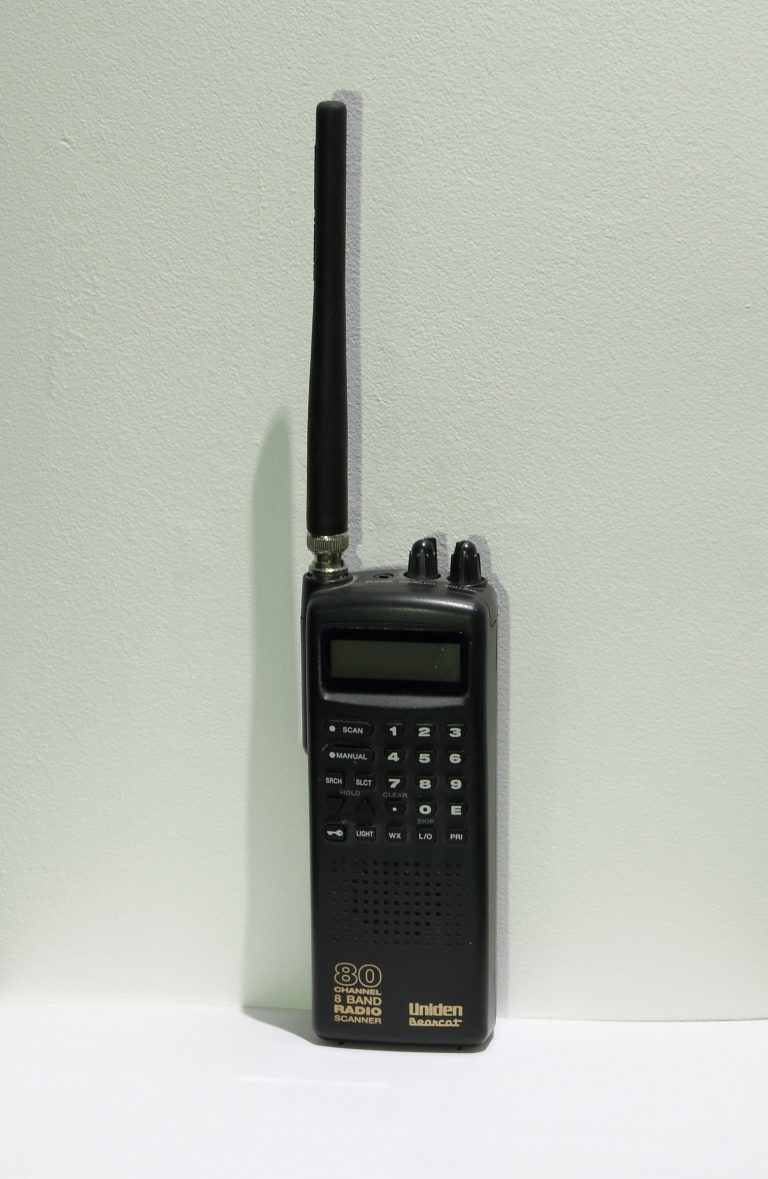
The best police scanners depend on your local radio system. Compare six current digital and P25 scanners, including…