4 Best Radio Holsters for Duty Belts (Police Picks 2026)
Compare four radio holsters and pouches for police duty belts and outer carriers, including Zero9, Bianchi, 5.11 and…

Yes, police can sometimes track a phone—but there is no single “track phone” button that works the same way in every case. Location can come from cellular-network records, a provider’s emergency data, location information held by technology companies, or evidence recovered from the device itself. The legal authority required depends on what investigators are seeking and why.
For most people asking this question, the useful distinction is between finding a phone in an emergency, obtaining historical location records, and identifying devices that were in a particular area. Those are different investigative techniques.
Potentially, yes. A cellular provider necessarily has network information associated with a phone connecting to cell sites. Other companies may hold different forms of location data if the user has enabled relevant services.
But access by law enforcement is governed by legal process and constitutional rules. In Carpenter v. United States, the U.S. Supreme Court held that obtaining the historical cell-site location records at issue in that case was a Fourth Amendment search and that the government generally needed a warrant supported by probable cause.
Historical cell-site location information, usually shortened to CSLI, can show which cell sites a phone connected to over time. It is not the same thing as a perfect GPS breadcrumb trail, and precision varies with the network and circumstances.
Carpenter is important because the Court rejected the idea that people automatically lose all Fourth Amendment protection in this location history merely because the records are held by a wireless carrier. The decision was also deliberately narrow, so it should not be read as answering every modern phone-location question.
This area changed again in 2026. In Chatrie v. United States, the Supreme Court addressed a Google geofence warrant used to identify devices located near a crime scene during a defined time period.
The Court treated access to that private location-history database as a Fourth Amendment search. The case matters because a geofence investigation starts with a place and time rather than with the identity of a known suspect. It is not the same technique as requesting the records of a phone investigators have already identified.
Emergency circumstances are different from an ordinary investigation. A carrier may be able to provide location information to public-safety authorities when someone calls 911, and federal law contains emergency-disclosure provisions for situations involving danger of death or serious physical injury.
That is why a missing-person or immediate-danger case should not be analyzed as though it were a routine evidence request in a months-old criminal investigation.
A phone that is truly powered down is not communicating with the cellular network in the normal way, so investigators cannot simply watch fresh cell-site connections appear. Historical records from before it was switched off may still exist, and other evidence may help establish where it was or what happened next.
“Airplane mode,” loss of cellular service and a fully powered-off device are also not identical technical situations.
Possessing the device opens a different category of evidence. Modern phones can contain messages, photos, application data, location artifacts and account information.
The Supreme Court’s decision in Riley v. California established the general rule that police ordinarily need a warrant to search the digital contents of a cell phone seized during an arrest. There are exceptions to warrant requirements, but a phone is not treated like an ordinary pocket container simply because it was found on an arrested person.
Sometimes location information can be obtained quickly, but “exact” is the dangerous word. Cell-site information, GPS-derived data, emergency location services and third-party app data do not all have the same accuracy.
A map pin in a movie makes the process look much cleaner than it often is in real investigations.
Not ordinarily just because an investigator asks informally. Providers have legal teams and processes for warrants, court orders, subpoenas and emergency requests. Which process applies depends on the type of data requested.
Investigators also have to think about preservation. Some records are retained for limited periods, so legal preservation requests can matter before the full production process is complete.
No. Technology can make location evidence powerful, but constitutional and statutory limits still apply. The more revealing and prolonged the tracking, the more important those privacy rules become.
The law is also developing quickly. Carpenter was decided in 2018; Chatrie added major Supreme Court guidance on geofence data in 2026. Anyone giving a categorical answer based on an old blog post may be describing yesterday’s law.
Police can obtain phone-location evidence in appropriate investigations, but the method matters. Historical cell-site records, emergency location, geofence data and a forensic search of a seized phone are different things with different legal questions.
If you are asking because police have contacted you personally, our articles on why police might call you and why a detective might come to your house explain some of the more ordinary reasons for police contact.
This article provides general U.S. information, not legal advice.
Compare four radio holsters and pouches for police duty belts and outer carriers, including Zero9, Bianchi, 5.11 and…
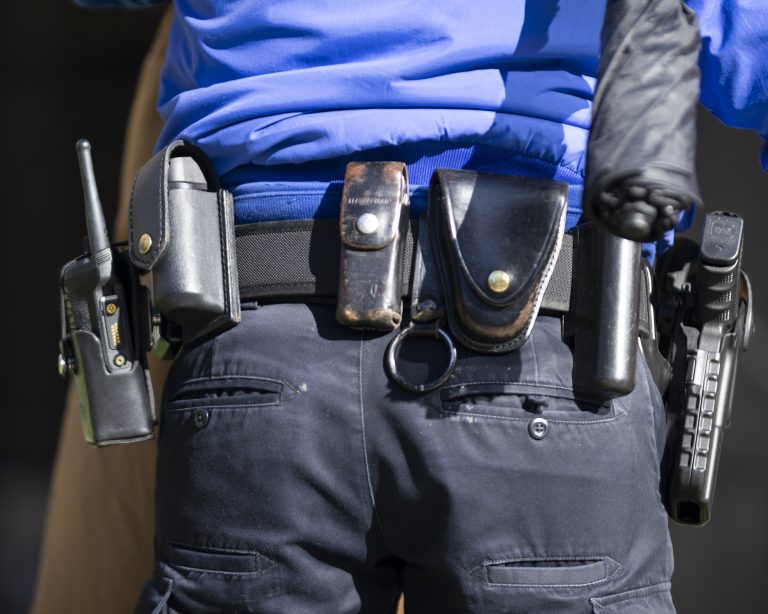
Compare four of the best law enforcement duty belts for police officers, including Bianchi, 5.11 and Condor options.…
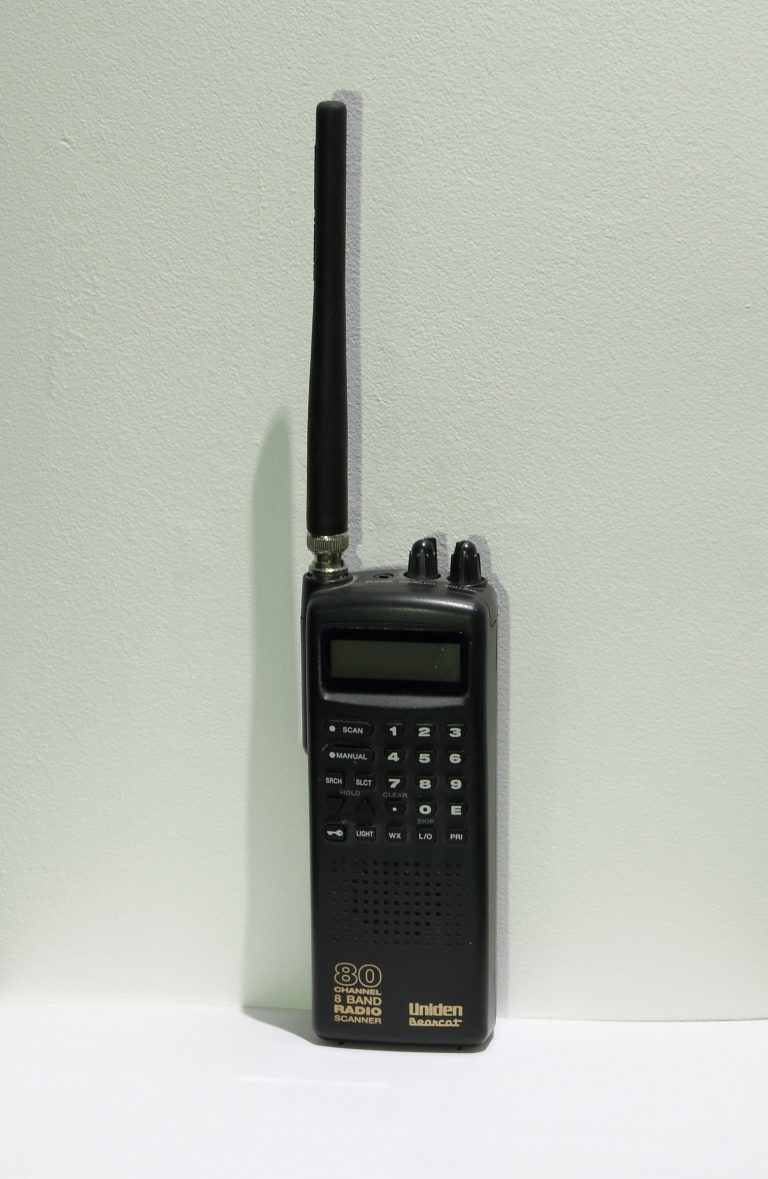
The best police scanners depend on your local radio system. Compare six current digital and P25 scanners, including…