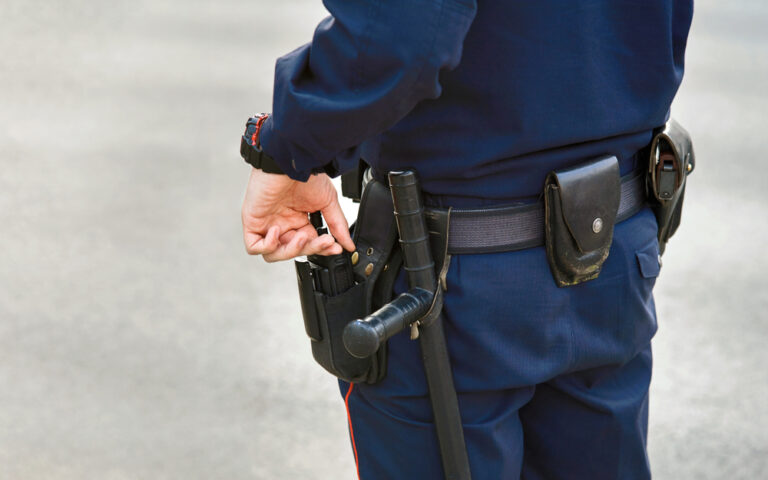
4 Best Radio Holsters for Duty Belts (Police Picks 2026)
Compare four radio holsters and pouches for police duty belts and outer carriers, including Zero9, Bianchi, 5.11 and…

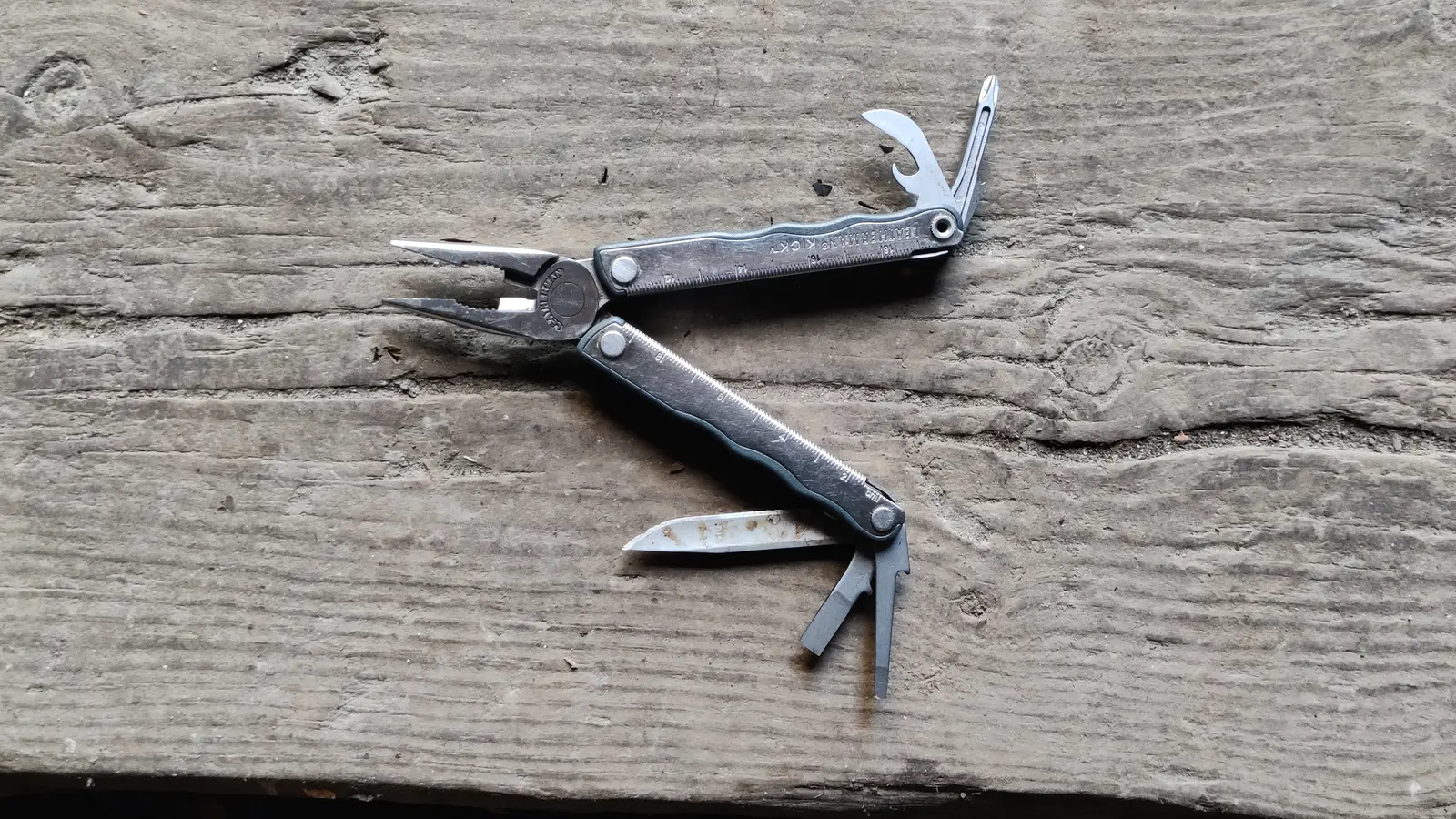
A police multi-tool earns its place by solving small, awkward problems without adding another bulky item to the duty belt or patrol bag. Pliers, wire cutters and two useful screwdrivers matter more to me than a long tool count printed on the box.
I have used a multi-tool for jobs that would never appear in a product advertisement: removing porcupine quills from a dog’s snout, tightening a gun holster and taking a license plate off a vehicle. That is the real reason I carry one. It is not specialist rescue equipment and it is not a replacement for full-size tools. It is the tool you have when the proper tool is somewhere else.
For police work, my three practical choices are the Leatherman MUT if you want a large, duty-oriented tool, the SOG PowerPint if size and price matter most, and the Gerber MP600 if you prefer a robust, traditional design. The right one depends on what your agency permits, where you carry it and which tools you actually use.
The work of a police officer can be unpredictable. Here are a few genuine examples from my own experience:
None of these jobs is dramatic. That is precisely the point. A multi-tool is most useful for the small problem that stops a larger task until somebody finds pliers or the correct screwdriver.
I would start with the tools, not the brand. The components I have needed most are pliers, wire cutters, a Phillips screwdriver, a flathead screwdriver, a knife, a saw, scissors and an awl. You may not need all eight, but pliers and screwdrivers are difficult for me to give up.
One-handed access can be helpful, but I would not choose a complicated opening system just because it looks impressive in a video. Try it with cold or wet hands. Also look at whether the tools lock, whether replaceable cutters are available, how easily the tool can be cleaned and whether the sheath fits your actual belt or bag.
Size is the trade-off. A large tool is usually more comfortable when you have to grip or turn something hard, but it is also the one most likely to be left in the car. A small tool disappears in a pocket, although the shorter handles give you less leverage.
I normally skip multi-tools with a tiny built-in flashlight. The light takes up space, and an officer should already have a proper duty flashlight. I would rather use that space for a better screwdriver or file.
The Leatherman MUT is the most specialized and expensive of these three. It was designed around military and firearm-maintenance tasks, with substantial pliers and replaceable components. That can make sense for an officer who works around firearms and wants those particular features.
It is also larger than the average multi-tool. Before paying for the extra features, ask whether you will carry it every shift and whether those firearm-specific tools fit your duties. A less specialized Leatherman may be the more sensible choice for general patrol work.
I like the practical carabiner and the solid feel, but “buy it for life” claims go too far. Any tool can wear, break or be lost. What you are paying for here is the tool set and construction, not immortality.
The SOG PowerPint is much smaller and easier to forget about in a pocket. That is its main advantage. It offers pliers and a broad set of small tools without the bulk of the MUT.
The compromise is leverage and working comfort. A compact multi-tool is not what I would choose for repeated heavy work, but it is useful for someone who wants a tool available without adding much weight. It also makes sense as a first multi-tool if you are still finding out which components you use.
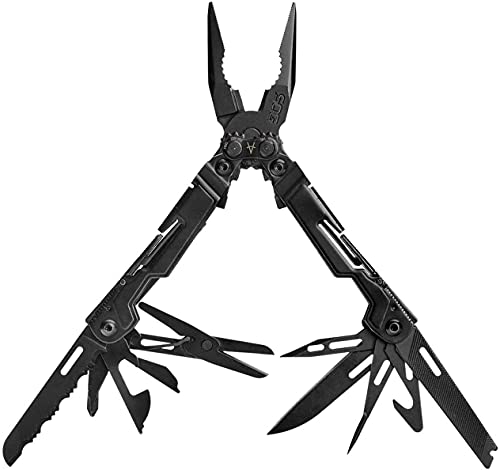
The Gerber MP600 has been around in several configurations, so check the exact model rather than assuming every MP600 has the same blade, cutter or finish. Its sliding plier mechanism and workmanlike construction are what make it interesting.
It is not a precision pocket tool in the same way as some expensive models. It is a traditional full-size multi-tool for users who value quick access to pliers and a design that does not try to be elegant. That simplicity appeals to plenty of police and military users, but it does not prove that it is automatically the best for you.

These are established names, but a logo does not settle the decision. Leatherman offers a wide range and often charges accordingly. SOG has several clever, compact designs at lower prices. Gerber has both respected workhorses and models that receive mixed opinions. Judge the exact model, not the reputation of every product the company has ever made.
For general patrol, I would choose the tool that gives me good pliers, wire cutters and screwdrivers at a size I will actually carry. For a firearms-focused role, the MUT’s specialized tools may justify its size and cost. For light everyday tasks, the PowerPint is easier to live with. The MP600 sits closer to a conventional duty tool.
A multi-tool can live on the belt, in a uniform pocket or in a clearly defined section of the patrol bag. I do not think it deserves prime duty-belt space for every officer. Belts are crowded enough already.
If you need it several times a shift, a sheath makes sense. If it comes out once every few weeks, the bag may be the better compromise. Wherever it goes, make sure it cannot open, snag other equipment or interfere with access to safety-critical gear.
Do not assume that being a police officer makes every multi-tool acceptable everywhere. Agency rules, assignments and local knife laws differ. Check blade length, locking mechanism, carry location and any restrictions that apply off duty or outside your jurisdiction.
A blade also needs sensible handling. A multi-tool is not a rescue knife, pry bar or evidence-processing instrument merely because it contains something that looks suitable. Use the correct specialist tool when one is available, and avoid contaminating or altering a scene without authorization.
If cutting performance is your priority, my separate guide to police knives explains why a dedicated knife and a multi-tool are not quite the same thing.
An awl is not quite a knife and not quite a flathead screwdriver. It is normally used to make holes in leather and other tough material. In my experience, it is also the tool I am more willing to use for light prying.
Imagine opening the lid of a paint bucket. I would rather risk the awl than snap the knife blade. If the awl breaks, it is annoying; the most useful parts of the multi-tool are still intact.
Some can, depending on the cutter and the restraint. Protect the person’s skin, follow department procedure and use the safest appropriate cutter available. Do not assume every small wire cutter will handle every restraint cleanly.
“Survival” is a popular term these days. Before Bear Grylls, we called it “camping.” A knife, saw, pliers and can opener are useful outdoors, but no pocket tool replaces judgment, clothing, shelter and training.
Usually, but the responsible answer is to check agency policy and local law. Multi-tools vary: some have locking blades, one-handed blades or dimensions that matter legally. The rules can also change when an officer is off duty or traveling.
The best multi-tool for a police officer is the one with useful pliers and drivers that the officer will actually carry. I would not pay for twenty tiny implements if the three important ones are awkward to reach.
The MUT is the specialized large option, the PowerPint is the compact option and the MP600 is the traditional robust option. Whichever you choose, practice opening the tools safely, keep it clean and remember that a pocket tool has limits. For a broader look at what is worth carrying, see the police gear list.
Compare four radio holsters and pouches for police duty belts and outer carriers, including Zero9, Bianchi, 5.11 and…
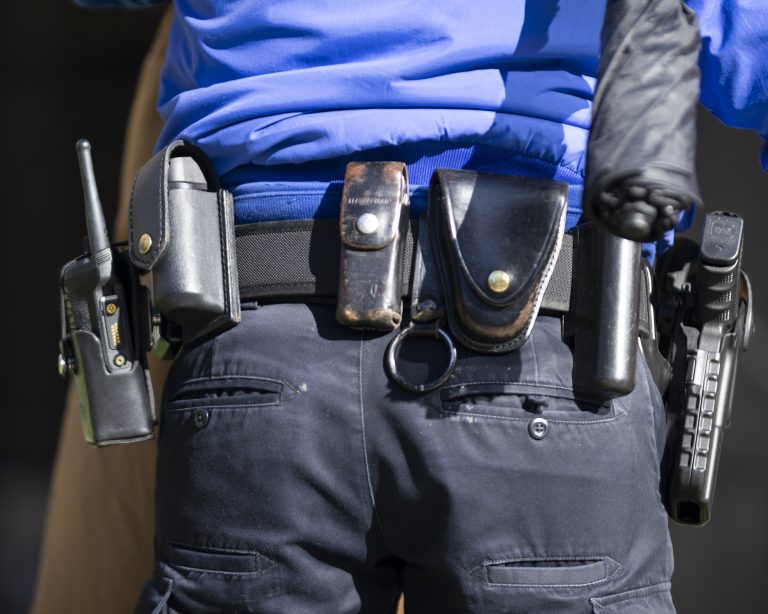
Compare four of the best law enforcement duty belts for police officers, including Bianchi, 5.11 and Condor options.…
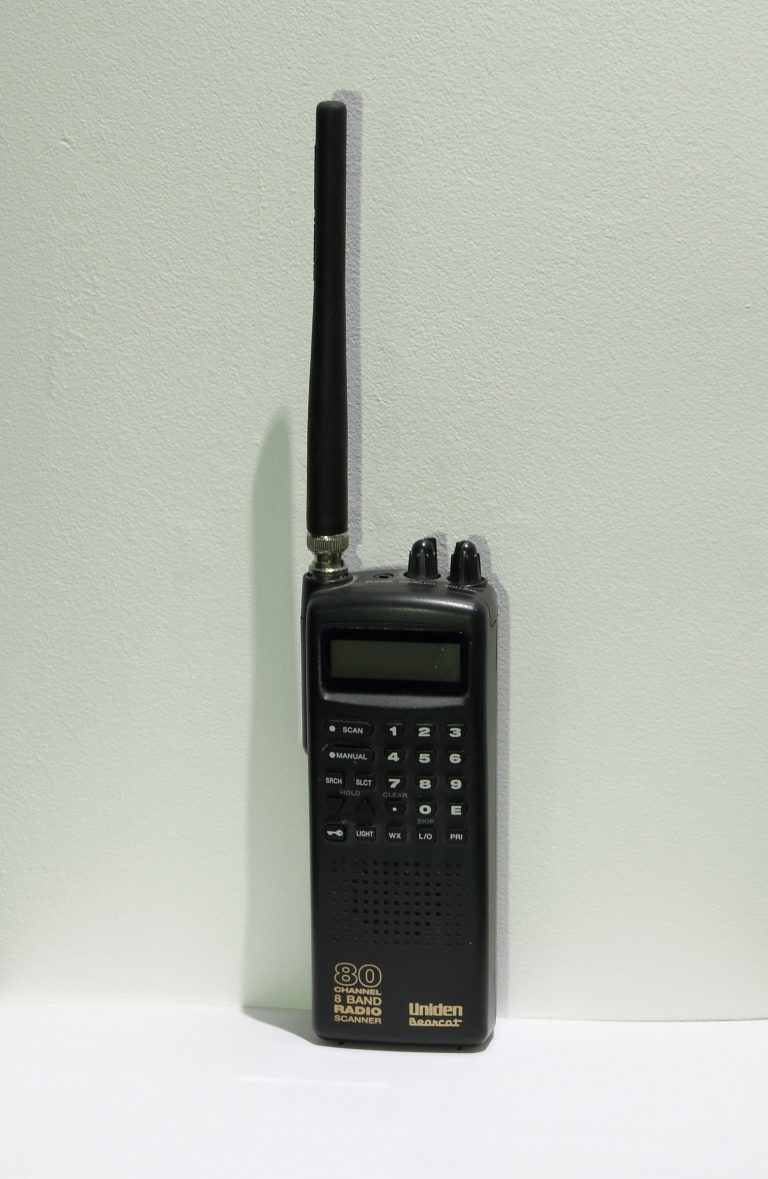
The best police scanners depend on your local radio system. Compare six current digital and P25 scanners, including…