4 Best Radio Holsters for Duty Belts (Police Picks 2026)
Compare four radio holsters and pouches for police duty belts and outer carriers, including Zero9, Bianchi, 5.11 and…

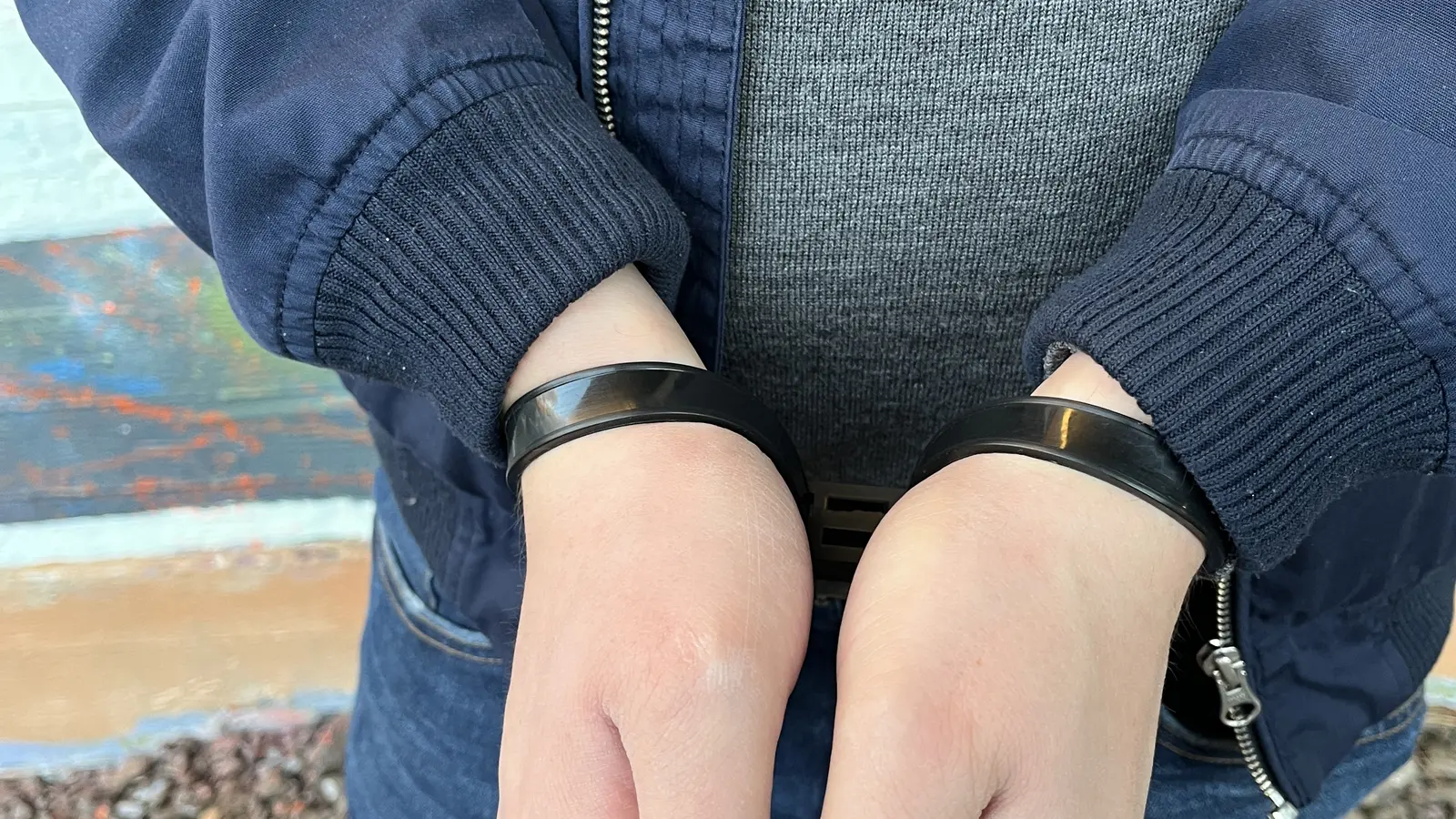
Zip tie handcuffs—more accurately called flex cuffs or disposable restraints—earn their place when officers may have to restrain several people quickly. They are light enough to carry in numbers and are especially useful during crowd-control operations and mass arrests. For routine arrests, however, metal handcuffs are still the normal choice.
One important distinction before getting into the five options: purpose-built flex cuffs are not the same thing as hardware-store cable ties. Proper restraints have wider contact surfaces and locking systems designed for restraint work. Whatever model you carry should be approved by your department, trained with before deployment, and paired with a cutter you can reach quickly.



I care more about handling than a dramatic tensile-strength number. The restraint should deploy cleanly with gloves, give each wrist its own loop, spread pressure over a reasonably wide band, and fold small enough that officers will actually carry several. A clearly marked training version and a purpose-built cutter are part of the system, not optional extras.
Department approval matters as well. A restraint can look strong in a product listing and still be a poor operational choice if officers have not trained with it or cannot remove it safely.
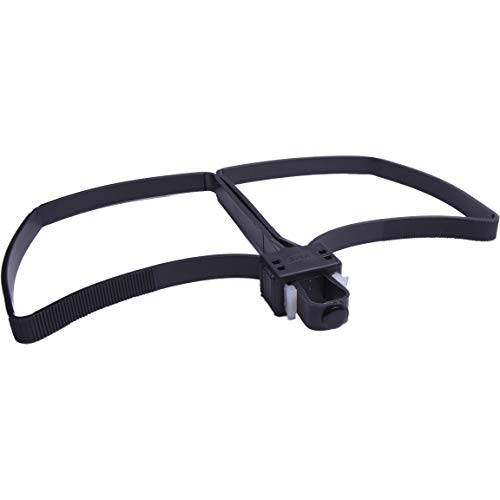
The Uzi Disposable Double Restraint Flex Cuff is a purpose-built, single-use restraint.
It has most of the features you’d expect from high-quality models for several applications.
I’ve found this style useful for law enforcement work where carrying several restraints matters.
The two loops give you separate control of each wrist instead of pulling both wrists into one loop.
Because they are single-use, there is no metal cuff to clean before the next deployment. That does not make them automatically safer: fit and regular checks still matter.
They are also a more appropriate restraint than improvised Velcro straps or ordinary zip ties.
The cuffs are sold as a professional restraint rather than a general-purpose cable tie.
The manufacturer lists more than 425 pounds of tensile strength. That figure is useful for comparison, but correct application and monitoring matter more than a number on the package.
Another notable feature I appreciate is how they are useful in a wide range of temperatures.
The stated operating range is -20°F to 120°F, which is useful for equipment that may spend a long time in a patrol bag or vehicle.
The restraint is made from a flexible synthetic polymer.
It also features a unique wedge shape that prevents LEOs from accidentally over-tightening the cuffs.
The double-loop layout lets you control and size each wrist separately, which is much better than placing both wrists inside one improvised loop.
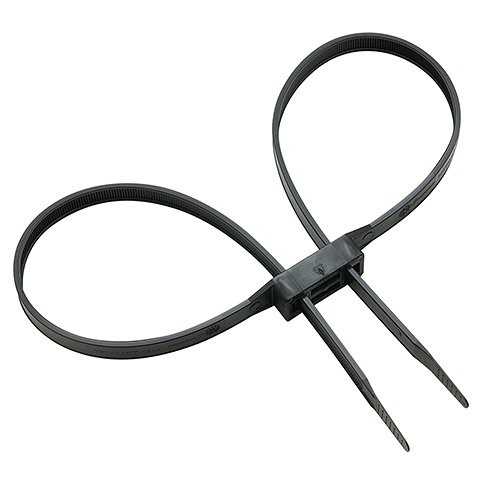
The Safariland Double Cuff is the option in this list I know best.
These are the zip tie cuffs used by our department and the ones we are the most experienced with. We often use them during riots and mass arrests for the following reasons:
The double cuff design is one of my favorite features since it allows me to have greater control over suspects
By engaging both wrists simultaneously, stabilizing the subject is simpler.
Also, I’ve found that these cuffs give you versatility even if one wrist is cuffed at a time. Instead of having both wrists tied into the same cuff, these have two separate restraints.
With that said, they are highly adaptable for the wrists as well as the forearms and ankles.
They also have a standard length of 34 inches when extended, which makes them easy to store.
What I found remarkable is how easy the restraints are for beginners to use.
The basic positioning is familiar if you already know traditional cuffing techniques, but flex cuffs still require hands-on training. They behave differently from steel cuffs when you size, check, and remove them.
Any attachment to a vehicle, cot, or fixed object should follow department policy and the instructions of the medical personnel involved.
The Safariland Double Cuff Disposable Restraints seem to have a more ergonomic design than other disposable cuffs.
It helps reduce the strain on the suspect’s shoulders, especially when cuffed from behind.
As an added convenience, the company includes a metal cuff cutter, which makes releasing subjects simpler.

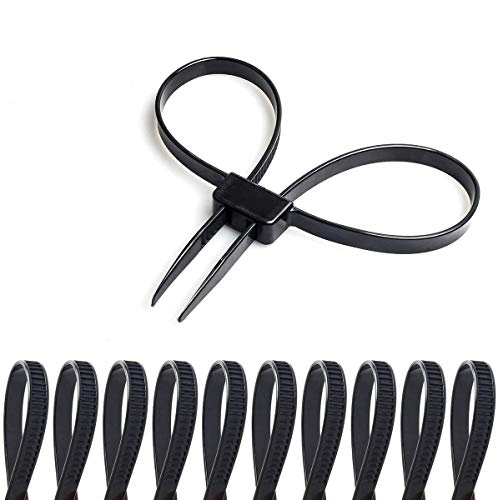
When in a pinch, I prefer the Coitak Disposable Zip Tie Handcuffs because it’s simple.
Its main advantage is that it stores easily in my vest and does not take long to deploy after practice.
Since it’s disposable, the plastic is of a higher quality than I had expected, even for one-time uses.
There are ten cuffs included in every order, which makes them a great choice for bulk ordering.
You’ll find they are quite similar to zip ties in that the material is high tensile strength nylon.
However, they are harder to break apart than traditional cable ties.
The portability of these cuffs is what makes them one of my top options for my police gear.
I no longer have to worry about struggling with long cuffs stored in my vest, especially since these are easy to remove.
The self-locking design is quick to apply after training. It should never be cinched down on the assumption that tighter means safer.
On average, you should be able to get up to 250 pounds worth of tensile strength per pair.
They’re also straightforward to maneuver, especially if you’re dealing with multiple subjects simultaneously.
The locking strip is difficult to defeat by pulling alone, but no disposable restraint should be treated as escape-proof.
Another massive advantage of these restraints is that they are rust-resistant.
Instead of relying on metal, like traditional handcuffs, these are made from lab tested nylon.
You can use them in an assortment of conditions, whether cold, warm, wet, or dry.
Also, they hold up well against UV rays, so the material isn’t likely to break down any time soon.
The combination of compact storage and resistance to moisture is what sold me on this type of cuff.
The seller lists UV resistance and a broad temperature range, although I would still inspect cuffs that have spent months exposed to heat or sunlight.
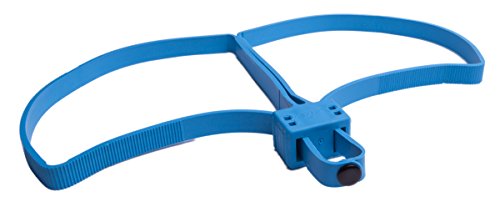
The blue CampCo Uzi model is most useful as a training cuff. The color makes it easy to keep separate from operational restraints.
One of the main features that I appreciate is how easy it is to use with different wrist sizes.
Compared to traditional zip ties, the material used in these cuffs is superior.
As a law enforcement officer, it’s crucial to have reliable restraints in any situation.
The double-loop layout is close enough to operational flex cuffs to make practice useful, without pretending that it behaves exactly like metal handcuffs.
I have ordered multiple sets to ensure I always have a backup pair if multiple suspects are detained.
For training, the reusable design saves cutting up a duty restraint after every repetition.
The operational version is single-use and is cut off after use; the blue trainer is the reusable one.
The important distinction is not hygiene but purpose: use the training model for practice and an approved operational model on duty.
One of the main features that jumped out at me was the high-quality materials the cuff is made from.
Instead of using traditional low-quality plastic, they feature synthetic polymer.
The reinforced material is harder to pull apart than an ordinary cable tie and requires an appropriate cutter for removal.
Unlike an operational restraint that is cut off after use, this version can be loosened and reused during training.
Without cutting the ties, you can loosen them so that they can be reused.
That is useful for officers who need repetitions before carrying flex cuffs on duty.
Another significant advantage is how easy these cuffs are to prepare in any situation.
Practice can make deployment smoother under stress, but no flex cuff removes the risk of injury with a combative or non-compliant subject.
They also come in a higher visibility blue color compared to the traditional black.
For law enforcement, security, or military police training, the visible color and reusable design are the real reasons to choose this model.
They’re straightforward to use to help you adhere to your department’s arrest procedures.
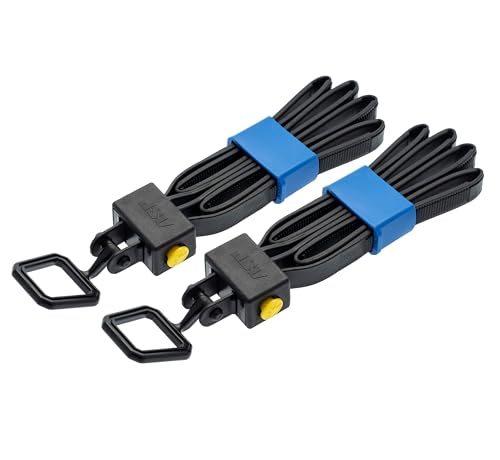
The ASP Tri-Fold has one of the more considered designs in this group. ASP sells disposable operational restraints as well as a red reusable training version, and the two should not be confused.
It has one of the more unusual restraint designs I’ve come across, and the folding layout genuinely helps with storage.
It is designed specifically for law enforcement use, with oversized loops and a covered locking area.
The useful features are practical rather than flashy.
The large loops and covered locking mechanism make them easier to apply after proper training.
The covered locking mechanism is difficult for a restrained person to reach.
There are added reinforcements at specific pressure points, which make the material far more durable.
In terms of storage, these are one of the best pairs of cuffs I’ve tried so far. You’ll be able to fold the cuffs, allowing them to get very compact for easy storage.
Pack sizes and pull options vary. The molded pull makes the restraint easier to find and deploy with gloved hands.
Another security feature is the secondary compression locks. If the pressure is applied to the cuffs, they double-down, providing added tensile strength.
As with the other double-loop models, the design limits wrist movement without forcing both hands into one narrow loop.
Also, I love the patented retaining block that boasts a twin strap design.
When it comes to using the cuffs in a hurry, they’re one of the better-made options on the market.
You can easily adjust the oversized loops to fit small and large wrists alike.
Also, ratcheting is more straightforward with the Roller Loc, which allows for an exceptionally smooth pull.
My overall pick is the ASP Tri-Fold system. The disposable model is compact and quick to deploy, while the red reusable version gives officers a sensible way to practice before carrying it.
The large loops and pull system are easier to manage under pressure than many flat restraints I have tried.
I would still choose the Safariland Double Cuff when familiarity and department-issued gear matter most—that is the one our department has actually used during riots and mass arrests.

Yes, but usually for a specific reason. Purpose-built flex cuffs are useful when officers expect multiple arrests, need to carry several restraints, or are working a crowd-control operation. Metal cuffs remain the normal option for a routine arrest.
No. Professional flex cuffs are made as restraints, with wider bands, purpose-built locks, and designs that separate the wrists. Ordinary cable ties are not a substitute for approved equipment.
Operational flex cuffs are generally single-use and must be cut off. Reusable versions are sold for training so officers can practice application without wasting duty cuffs. Check the exact model rather than assuming it can be loosened and used again.
Since flex cuffs are often used during riots or mass arrests, they may stay on an arrestee longer than expected. Do not cinch them tighter than necessary. Check circulation and ask about numbness, tingling, or increasing pain; swelling or color change should be treated seriously. Follow department policy and arrange prompt reassessment or medical attention when needed.
A forensic review indexed by the National Library of Medicine describes injuries associated with cable-tie restraints. The practical point is simple: application is not the end of the officer’s responsibility. Monitor the person and keep an approved cutter available.
Interested in learning more about handcuffs? Be sure to check out our article about the different types of handcuffs.
Compare four radio holsters and pouches for police duty belts and outer carriers, including Zero9, Bianchi, 5.11 and…
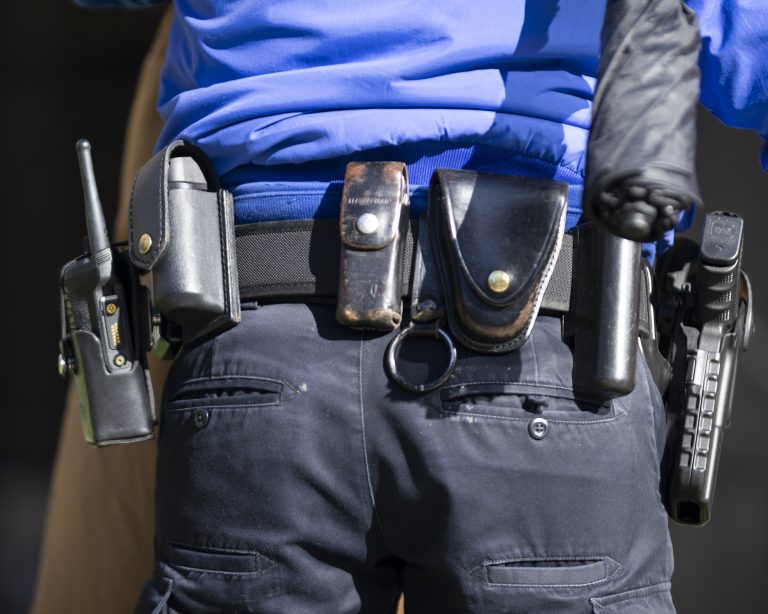
Compare four of the best law enforcement duty belts for police officers, including Bianchi, 5.11 and Condor options.…
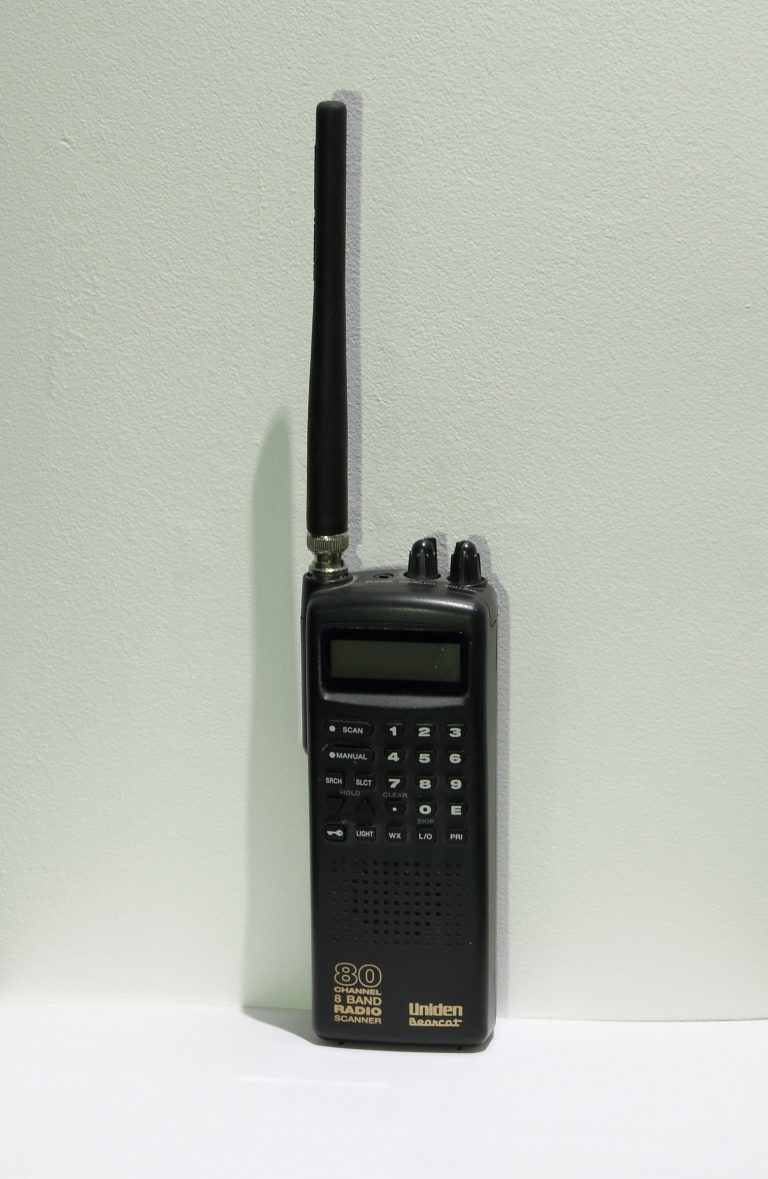
The best police scanners depend on your local radio system. Compare six current digital and P25 scanners, including…