
What Radios Do Police Use? Police Radio Systems Explained
What radios do police use? Learn how police portable and mobile radios work, what P25 and trunking mean,…

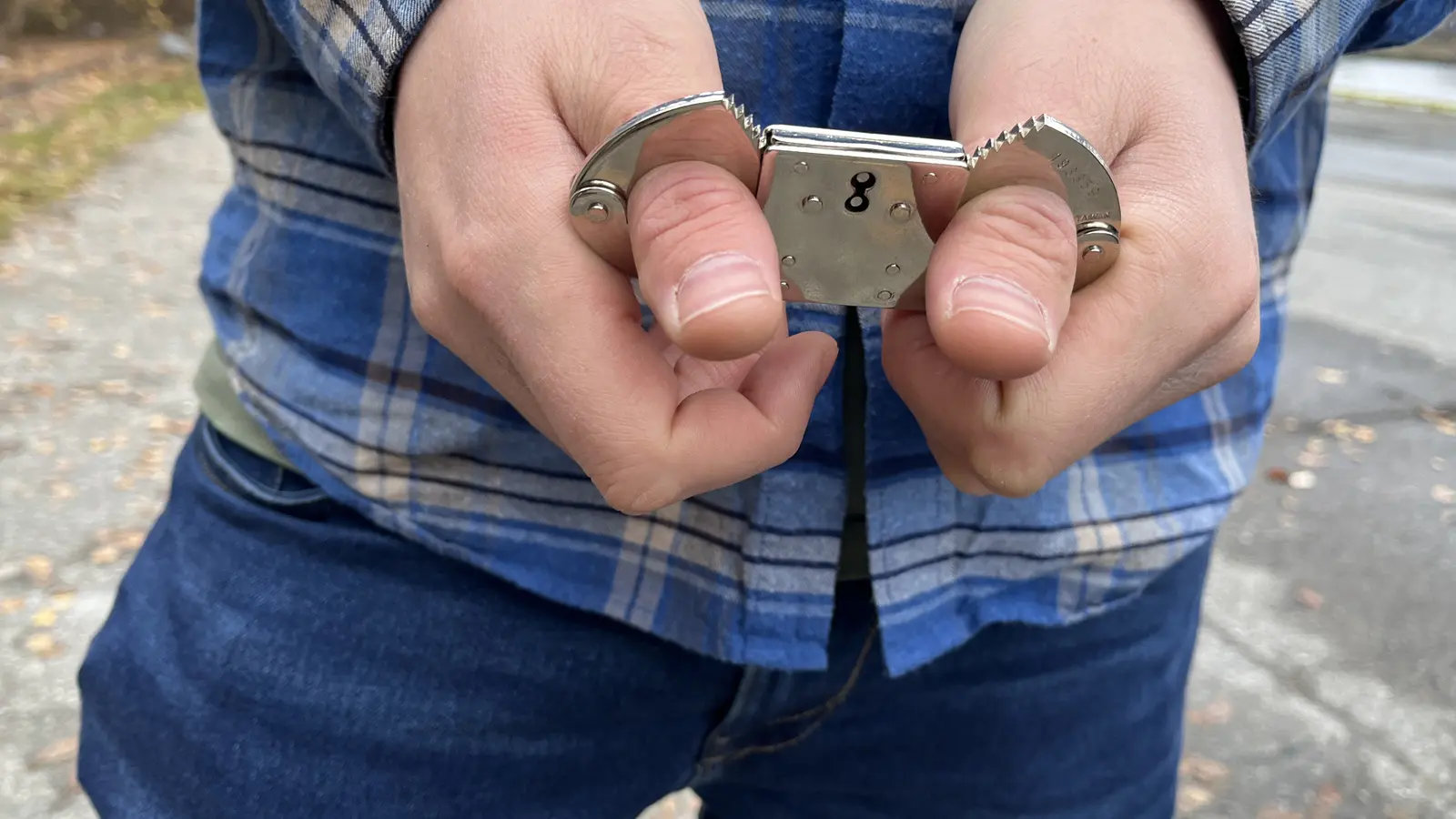
I’ve done a thumbcuffs review and found the one I think is best.
Thumbcuffs are based on the same principle as handcuffs. The difference is that you attach the thumbs to each other instead of the wrists. They are small, rigid restraints that weigh next to nothing and are easy to carry.
I do not use thumbcuffs actively and have only used them on one occasion. I had already used my other two pairs of handcuffs, and there was still one person left to be arrested. Coincidentally, there was a pair of thumbcuffs on the kitchen table. I used them on the individual, who fortunately did not resist arrest.
After that, I always had a pair of thumbcuffs with me in my uniform. That does not mean I consider them a replacement for normal handcuffs. I don’t.
Thumbcuffs hold a person’s thumbs close together instead of restraining the wrists. Their main attraction is the compact size. They can fit in a pocket or take up very little room on a duty belt.
That compact size is also the problem. A person wearing thumbcuffs still has far more movement than someone wearing standard handcuffs. The other fingers remain free, and the device gives the officer much less control. For me, they are a backup restraint for an unusual situation—not a primary restraint.
The Omega Research Foundation describes thumbcuffs and finger cuffs as metal restraints that restrict hand movement by holding the thumbs or fingers in a fixed position. Some have serrated inner edges. Even smooth models can cause injury if they tighten or are applied incorrectly.
The one real situation I described above was not a normal use case. We had more people to arrest than I had regular cuffs available, the thumbcuffs happened to be within reach, and the person did not resist. Had the person been combative, I would not have trusted thumbcuffs to keep anyone safe.
I have trained with them and “played” with them more than I have used them operationally. That distinction matters. I am comfortable telling you how the models I handled felt and how the double locks worked. I am not going to pretend that I built years of operational experience with a restraint I used once.
If you are choosing restraints for professional work, start with a dependable pair of police-grade handcuffs. Thumbcuffs only make sense as a compact backup, and only if your law, agency policy, and training allow them.

These are the thumbcuffs I carried. I have not used this model in a real arrest, but I trained with them and spent time testing the mechanism. They felt incredibly solid, and the double lock worked very well on my pair.
The double lock is important because it is intended to stop the cuff from ratcheting tighter after it has been set. Even so, I would check any restraint before carrying it and keep an eye on its condition. A small mechanism is not something I would trust blindly.

The HWC thumbcuffs I handled were built very solidly and included a double lock. They were straightforward, heavy for their size, and less complicated than some of the product descriptions make them sound.
Some sellers describe thumbcuffs as suitable for use around a big toe. I do not understand why that would be necessary, and it is not something I recommend.

These were also solidly built and had a double lock. Read the supplied instructions and make sure you understand how the double lock works before considering them for any professional purpose. Some users have reported difficulty with the mechanism, so it should be checked rather than assumed to work perfectly.
Thumbcuffs are NOT a primary restraint. Nothing beats proper handcuffs for that purpose. The chance of injury is greater because the pressure is concentrated on a much smaller part of the body, and a device that ratchets tighter can affect circulation quickly.
They are also difficult to use safely on a person who is resisting. If you work in law enforcement or security, follow your training and agency policy. If you are not trained and legally authorized to use restraints, do not treat this review as instruction to restrain someone.
Rules on possession, sale, export, and professional use vary by location. Check the law where you live rather than assuming that a product sold online is legal or approved for duty use.
Of the models I handled, I preferred the Takedown Gear double-lock thumbcuffs. They felt solid, the double lock on my pair worked well, and their small size made them easy to carry.
But the more important conclusion is that traditional handcuffs are preferable in almost every situation. Thumbcuffs are interesting and compact, but they provide less control and leave less room for error.
If you want to compare restraint designs before buying anything, start with my guide to the different types of handcuffs. Whatever you carry, inspect it regularly and follow a sensible handcuff maintenance routine.
What radios do police use? Learn how police portable and mobile radios work, what P25 and trunking mean,…
There is no single national police written exam. Learn how tests such as PELLETB and NTN FrontLine differ,…

Police field training bridges the gap between academy and solo patrol. Learn what FTO means, how phases and…